


Get Free Consultation
8:30AM - 7:00PM
Get Free Consultation
8:30AM - 7:00PM
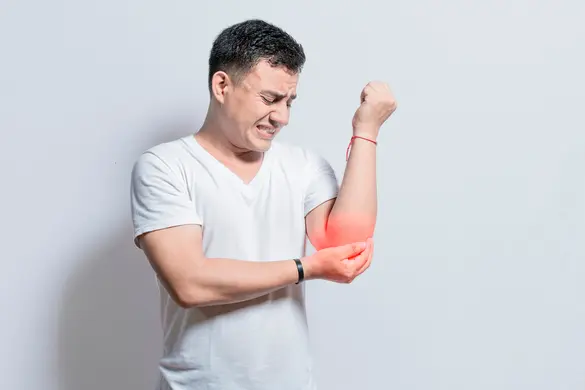
Elbow pain can affect your muscles, tendons, joints, ligaments, or nerves. It may develop suddenly after an injury or gradually from repeated movements.
Common situations that can lead to elbow pain include:
Elbow pain may make everyday activities harder. You might experience discomfort while working, exercising, lifting, pushing, or using your hand.
A physiotherapist can assess your elbow and identify what may contribute to your symptoms. They can then create a treatment plan based on your condition, activity level, and recovery goals.

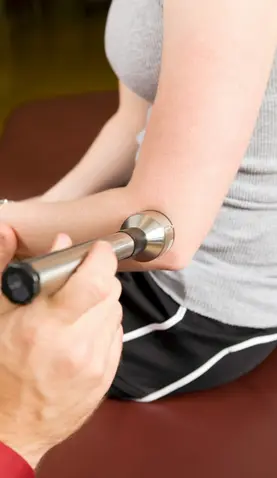
Different problems can cause elbow pain. Common causes include:
01
Tennis elbow – Irritation of the tendons on the outside of the elbow.
02
Golfer’s elbow – Irritation of the tendons on the inside of the elbow.
03
Sports injuries – Sudden movements, falls, or impact can strain the elbow.
04
Repetitive strain – Repeated gripping, lifting, or wrist movements can overload the tissues.
05
Muscle or tendon injuries – Overuse can cause pain and weakness.
06
Joint problems – Stiffness or irritation can reduce comfortable movement.
07
Nerve irritation – Nerve pressure can cause pain, tingling, or numbness.
Your physiotherapist can examine the elbow and surrounding areas to find factors that may contribute to your pain.
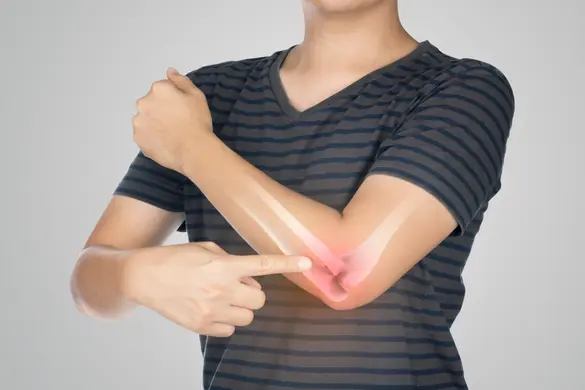
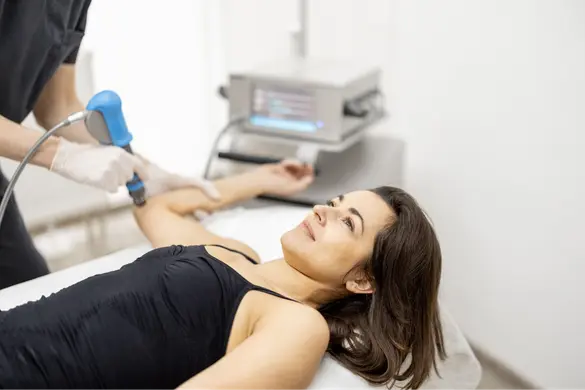
Elbow pain can cause several symptoms, depending on the underlying problem.
You may notice:
Your symptoms may improve with rest but return when you resume certain activities. A proper assessment can help identify the cause and guide your recovery.
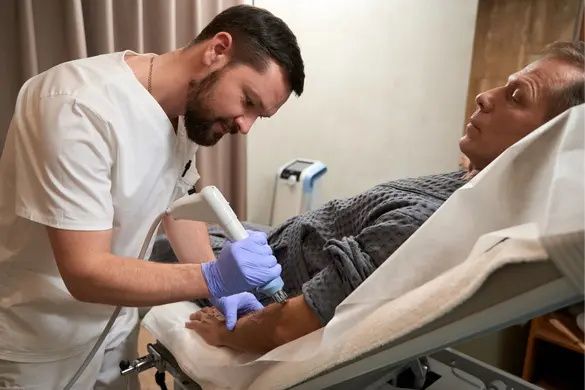
Physiotherapy can help with many elbow conditions and injuries, including:
Your physiotherapist will assess your symptoms, movement, strength, and activity level. They can then build a treatment plan that matches your needs.
Physiotherapy takes a practical approach to elbow pain. Your treatment may include:
01
Assessment – Your physiotherapist checks your movement, strength, symptoms, and injury history.
02
Manual therapy – Hands-on techniques can help improve movement and reduce stiffness.
03
Exercise therapy – Targeted exercises can improve strength, mobility, and control.
04
Stretching – Specific stretches can improve flexibility in the wrist and forearm.
05
Progressive strengthening – Gradual loading can help the elbow handle everyday and sports activities.
06
Activity guidance – Your physiotherapist can show you how to modify activities that increase your symptoms.
07
Injury prevention – Education can help you manage workload, movement, and exercise technique.
The goal is to help you move comfortably, regain strength, and return to the activities you enjoy.
Exceptional care at Townline Physiotherapy! The knowledgeable and caring team crafted a personalized plan that transformed my mobility and quality of life. They truly go above and beyond for their patients.











Shoulder pain can make surprisingly simple things difficult. Reaching into a cupboard, putting on a...
The Lower Mainland offers some of British Columbia’s best hiking opportunities. From local trails around...

A total knee replacement (TKR) can significantly improve mobility and quality of life for people...
© 2022 - 2026 Townline Physiotherapy
Website Design and Marketed by