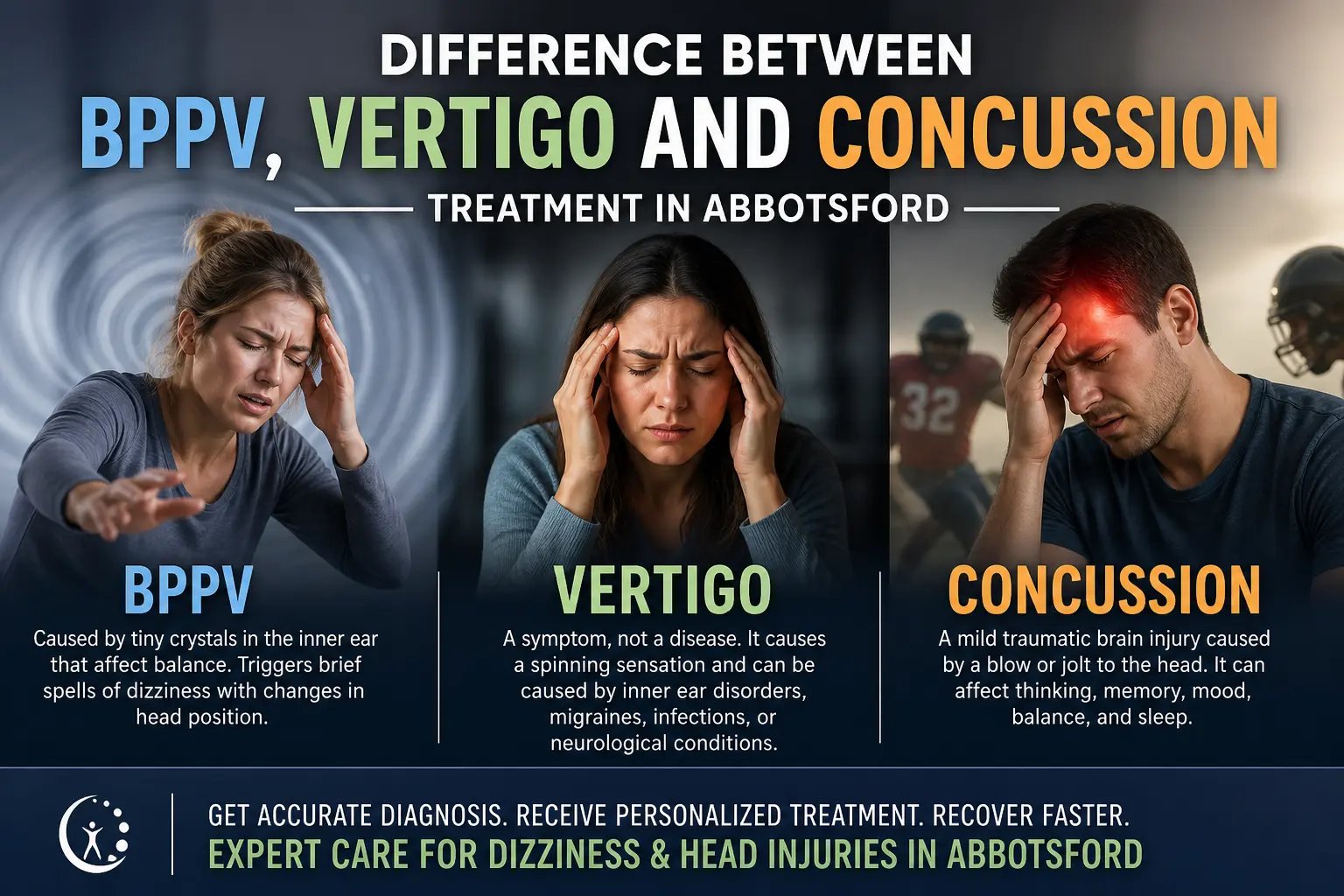
Dizziness can feel confusing and unsettling. Many people use the word “vertigo” to describe any spinning or lightheaded sensation—but not all dizziness is the same. Conditions like BPPV, general vertigo, and concussion-related dizziness have different causes and require different treatment approaches.
At Townline Physiotherapy, we often assess and treat patients with dizziness using vestibular physiotherapy, detailed clinical testing, and individualized rehabilitation plans.
The difference between BPPV, vertigo, and concussion
How we assess and differentiate these conditions
How vestibular physiotherapy helps
The role of balance retraining
When counselling support may be helpful
What recovery typically looks like
What Is Vertigo?
Vertigo is not a diagnosis—it is a symptom.
It refers to a sensation that:
The room is spinning
You are moving when you are not
You feel off-balance or disoriented
Vertigo can be caused by different conditions, including:
Inner ear issues (like BPPV)
Vestibular dysfunction
Concussion
Neurological causes
This is why a proper assessment is essential—because treatment depends on the underlying cause.
What Is BPPV?
BPPV (Benign Paroxysmal Positional Vertigo) is one of the most common causes of vertigo. It occurs when tiny crystals in the inner ear become displaced and move into the wrong part of the vestibular system.
Common Symptoms of BPPV
Brief spinning sensation with head movement
Dizziness when lying down or rolling in bed
Symptoms lasting seconds to under a minute
Triggered by looking up or bending forward
Nausea (sometimes)
Key Feature
BPPV is position-dependent, meaning it is triggered by specific head movements.
What Is Concussion-Related Dizziness?
A concussion is a mild traumatic brain injury that can affect how the brain processes balance, vision, and movement.
Unlike BPPV, concussion-related dizziness is often:
More persistent
Associated with cognitive symptoms
Linked with neck and visual issues
Triggered by movement, screens, or activity
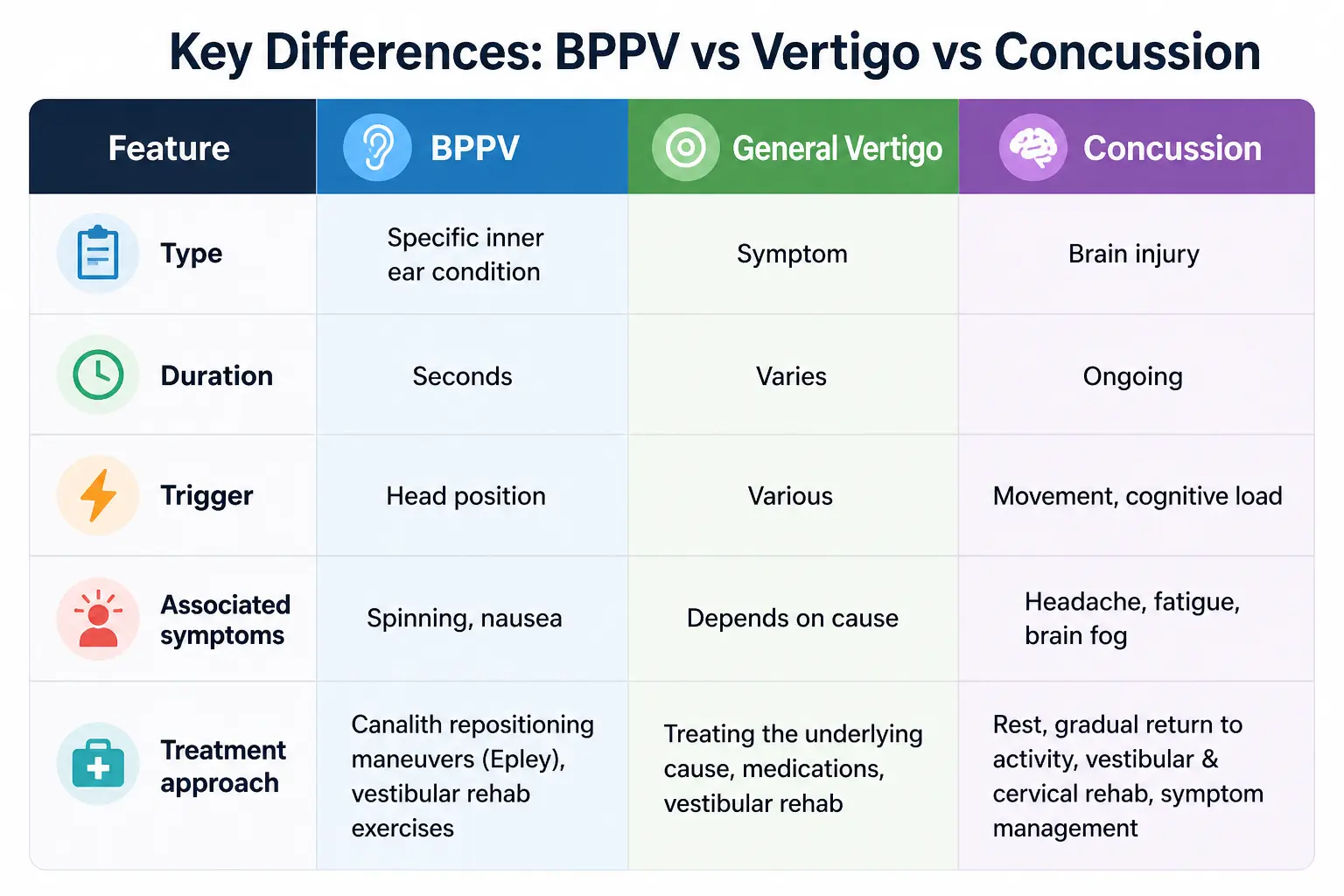
Key Differences: BPPV vs Vertigo vs Concussion
Vestibular Physiotherapy in Abbotsford
Vestibular physiotherapy is a specialized area of physiotherapy that focuses on treating dizziness, balance problems, and inner ear disorders.
At Townline Physiotherapy, vestibular physiotherapy is used to:
Assess the cause of dizziness
Treat inner ear conditions like BPPV
Retrain balance systems
Improve coordination between vision and movement
Support recovery after concussion
Assessment: How We Differentiate BPPV, Vertigo and Concussion
A detailed assessment is the most important step.
1. Subjective History
We ask about:
When symptoms started
What triggers dizziness
Duration of symptoms
Associated symptoms (headache, nausea, brain fog)
History of injury or accident
2. Positional Testing for BPPV
Specific tests (like Dix-Hallpike) help identify:
Which ear is affected
Which canal is involved
Whether BPPV is present
3. Vestibular Testing
This may include:
Eye movement testing
Gaze stabilization
Head movement tests
Balance assessment
4. Concussion Screening
If a concussion is suspected, we assess:
Cognitive function
Symptom severity
Neck involvement
Visual tracking
Tolerance to movement
Why Proper Diagnosis Matters
Treating BPPV with general exercises won’t work.
Treating concussion like BPPV won’t work either.
That’s why accurate diagnosis leads to faster recovery.
Treatment for BPPV
BPPV is usually treated with repositioning maneuvers.
Canalith Repositioning (Epley Maneuver)
This involves guided head movements to reposition inner ear crystals.
Benefits:
Often resolves symptoms quickly
Non-invasive
Effective in 1–3 sessions in many cases
Treatment for General Vertigo
Treatment depends on the underlying cause.
Vestibular Rehabilitation May Include
Gaze stabilization exercises
Habituation exercises
Balance retraining
Movement desensitization
Concussion Treatment in Abbotsford
Concussion recovery requires a multidisciplinary approach.
At Townline Physiotherapy, treatment may include:
When one system is affected (like in BPPV or concussion), the brain needs to relearn how to balance effectively.
Common Balance Exercises
1. Single Leg Balance
Stand on one leg
Hold for 20–30 seconds
Progress by closing eyes
2. Heel-to-Toe Walking
Walk in a straight line
Place one foot directly in front of the other
3. Head Movement Balance
Stand and gently turn your head side to side
Progress gradually
4. Gaze Stabilization
Focus on a fixed point
Move your head while keeping eyes on the target
These exercises help retrain coordination between the eyes, brain, and body.
Role of Counselling in Concussion Recovery
Concussions don’t just affect the body—they can also impact mental and emotional health.
Common Emotional Symptoms
Anxiety
Frustration
Mood changes
Difficulty coping
Fear of symptoms returning
How Counselling Helps
Counselling may support:
Emotional regulation
Coping strategies
Stress management
Recovery confidence
Adjustment to temporary limitations
At Townline Physiotherapy, we may recommend counselling as part of a comprehensive concussion recovery plan when needed.
When Should You Seek Treatment?
You should consider vestibular physiotherapy in Abbotsford if you have:
Dizziness lasting more than a few days
Spinning with head movement
Balance issues
Recent concussion
Difficulty focusing or walking steadily
Symptoms affecting daily life
Early treatment leads to faster recovery.
Final Thoughts
Dizziness can have different causes—and understanding whether it is BPPV, vertigo, or concussion-related is key to effective treatment.
With proper assessment and the right approach, most patients improve significantly.
At Townline Physiotherapy, we use: