


Get Free Consultation
8:30AM - 7:00PM
Get Free Consultation
8:30AM - 7:00PM
March 31, 2026
Flat feet are more common than many people realize, and while some people never notice a problem, others develop recurring pain in the feet, ankles, knees, hips, or lower back. In clinic, one of the most overlooked causes of persistent lower-body pain is poor foot mechanics.
At Townline Physiotherapy, we often see patients who come in for ankle pain, knee pain, hip tightness, or back discomfort—only to discover that the problem may actually begin at the feet. This is why physiotherapy Abbotsford care should not only focus on the painful area but also on the entire movement chain.
In this article, Physio Jimmy shares practical insights on how flat feet can affect the ankle, knee, hip, and back, what symptoms to watch for, and how physiotherapy Abbotsford treatment can help correct the issue through strengthening, mobility work, gait retraining, and proper support.
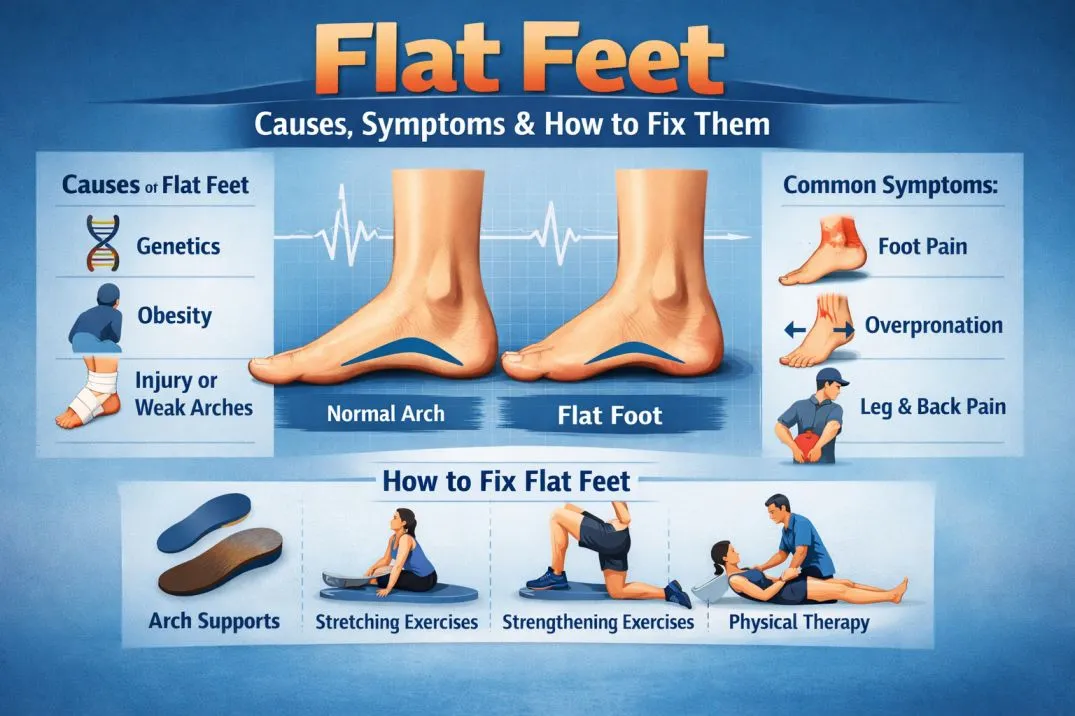
Flat feet, also called fallen arches, occur when the arches of the feet collapse or are lower than normal. This can happen on one side or both feet and may be present since childhood or develop over time.
Normally, the arch of the foot helps absorb shock and distribute body weight properly. When the arch collapses, the foot may roll inward excessively. This is called overpronation.
Overpronation can create abnormal stress throughout the body, especially during walking, running, standing, lifting, or sports.
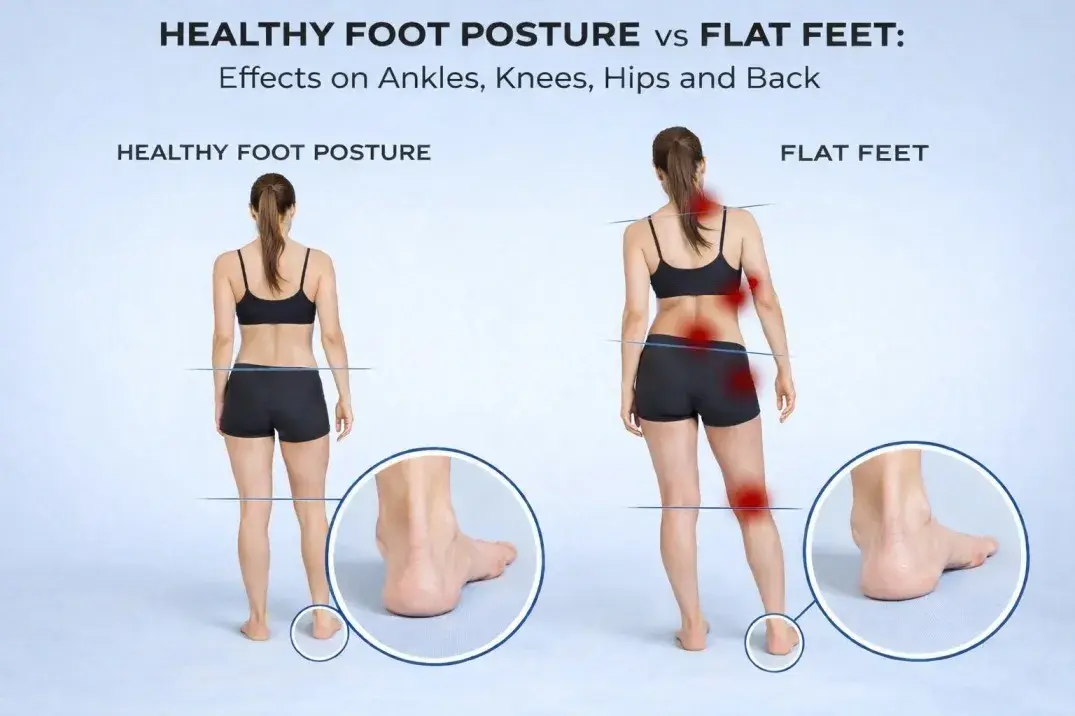
The feet are the foundation of the body. If the base is unstable, the joints above it often compensate. This is why flat feet can create a chain reaction upward.
When the arch collapses, the ankle often rolls inward more than it should. Over time, this can lead to poor ankle alignment and instability.
Flat feet can place more load on the posterior tibial tendon, ankle ligaments, and calf muscles. This may contribute to ankle weakness, poor balance, and chronic strain.
Click here for : Ankle Sprain TreatmentThe knee is strongly affected by what happens below it. When the feet roll inward, the shin often rotates inward as well, which changes knee alignment.
Flat feet often increase stress on the patellofemoral joint and surrounding tissues. This can contribute to runner’s knee, patellar tendon irritation, IT band tension, and poor squat mechanics.
Many people do not realize that foot posture can directly affect the hip. If the feet collapse inward, the hips may internally rotate or become less stable.
Flat feet can reduce the ability of the glute muscles to stabilize the pelvis properly. This can overload the hip flexors, outer hip structures, and lower back.
When the feet and legs are not aligned well, the pelvis and spine often compensate. This can create long-term lower back stress.
Flat feet can contribute to changes in pelvic tilt, hip control, and spinal loading. Over time, this may cause chronic mechanical lower back pain.
You may benefit from assessment at a physiotherapy clinic Abbotsford if you notice:
At Townline Physiotherapy, a detailed movement assessment can help determine whether flat feet are contributing to your symptoms.
The answer depends on the cause and severity.
Not every flat foot needs to be “fixed,” but symptomatic flat feet absolutely can be improved and managed well with the right treatment approach.
In many cases, physiotherapy Abbotsford treatment focuses on:
The goal is not just to support the foot—it is to improve the entire chain from the foot to the back.
At Townline Physiotherapy, treatment for flat feet and related pain may include a combination of:
Some patients may also benefit from complementary therapies such as:
Below are some of the most useful strengthening exercises we commonly recommend in physiotherapy Abbotsford for flat feet and poor lower-limb mechanics.
This is one of the most important exercises for flat feet.
Reps: 10–15 holds per foot
Reps: 10–15 per side
Reps: 2–3 sets of 12–15
Progression: Try single-leg heel raises when stronger.
This muscle is extremely important in supporting the arch.
Reps: 2–3 sets of 12
Progression: Try with eyes closed or on a cushion.
The hips need to be strong to support better lower-limb alignment.
Reps: 2–3 sets of 15
Reps: 2–3 sets of 12–15
Reps: 10–15 steps each direction
Strengthening is important, but so is improving flexibility in the areas that often become tight.
Why It Helps: p> Tight calves can worsen overpronation and limit ankle movement.
Hold: 20–30 seconds
Why It Helps: Targets deeper calf muscles involved in ankle mobility.
Why It Helps: Helps reduce foot tightness and morning stiffness.
Why It Helps: Flat feet often affect the entire posterior chain.
Why It Helps: Helpful when hip tightness and pelvic compensation are present.
Orthotics can be helpful for some people—but not everyone needs them.
In many cases, orthotics are most effective when used alongside a strengthening and movement correction program, not as the only solution.
A physiotherapist Abbotsford BC can help determine whether you may benefit from:
Orthotics may reduce stress, but muscle strength and movement control are what create long-term improvement.
You should consider booking an assessment at a physiotherapy clinic Abbotsford if:
Early treatment can prevent small issues from turning into chronic problems.
Flat feet are not “just a foot problem.” They can influence the way your ankle, knee, hip, and lower back move every day. The good news is that with the right assessment and a targeted rehab plan, many of the symptoms linked to flat feet can improve significantly.
At Townline Physiotherapy, we focus on identifying the root cause of pain and building a treatment plan that improves the way your whole body moves—not just the area that hurts.
If you’ve been dealing with recurring foot pain, ankle instability, knee pain, hip tightness, or lower back discomfort, physiotherapy Abbotsford treatment may help you move better, feel stronger, and prevent future injury.
Yes. Flat feet can change leg alignment and increase stress on the knee joint, especially around the kneecap.
Yes. Poor foot mechanics can affect posture, hip control, and spinal loading, which may contribute to lower back pain.
No. Some people have flat feet without symptoms, while others develop pain due to weakness, poor mechanics, or overuse.
Yes. Strengthening the foot, ankle, hips, and core can significantly improve support and movement control.
Not always. Some people benefit from orthotics, but many also need strengthening and gait correction for long-term improvement.
Absolutely. Adults with symptomatic flat feet often improve with targeted rehab and movement retraining.
September 18, 2026
August 29, 2026

August 19, 2026

August 10, 2026
July 28, 2026
Mon to Fri: 08:30am - 7:00pm
Sat: 09:00am - 4:00pm
Sun: Closed
Shoulder pain can make surprisingly simple things difficult. Reaching into a cupboard, putting on a...
The Lower Mainland offers some of British Columbia’s best hiking opportunities. From local trails around...
A total knee replacement (TKR) can significantly improve mobility and quality of life for people...
© 2022 - 2026 Townline Physiotherapy
Website Design and Marketed by

Here to help you book your appointment