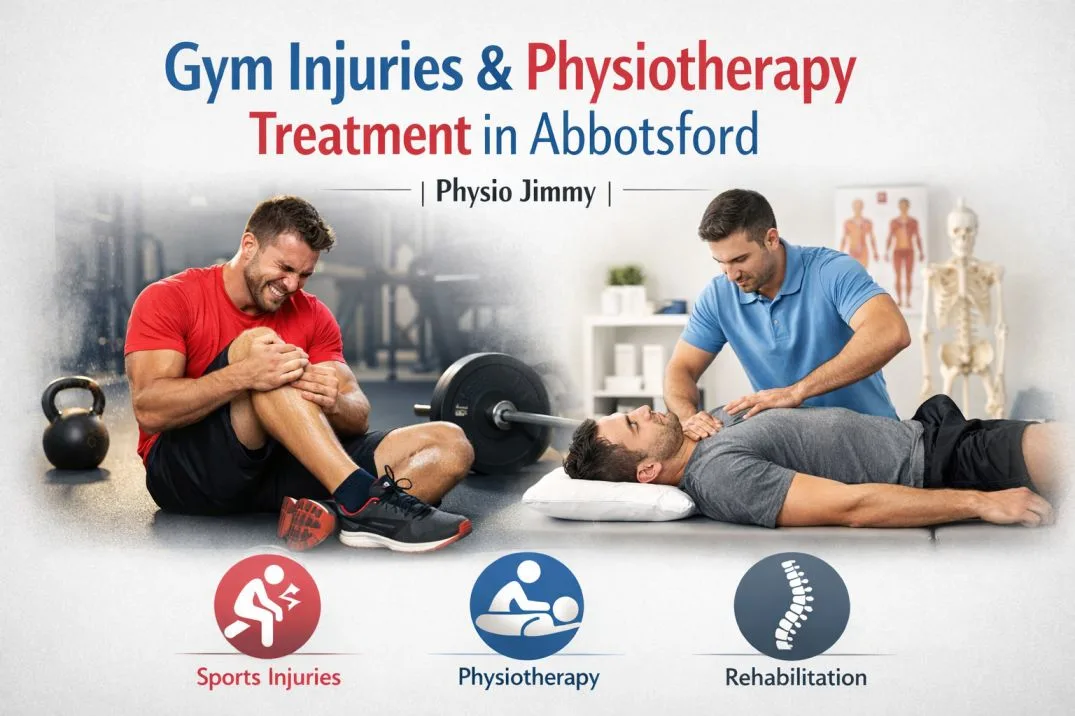
Going to the gym is one of the best things you can do for your health—but only when your body is moving well and your training is structured properly. At
Townline Physiotherapy, one of the most common things we see is not “exercise is bad,” but rather people getting hurt because of poor mechanics, overtraining, weak stabilizers, poor warm-up habits, ego lifting, or skipping recovery.
As a physiotherapist, I often tell patients: most gym injuries are preventable.
Whether you are into weight training, CrossFit-style workouts, cardio, bodybuilding, functional fitness, or just trying to stay active, understanding how injuries happen—and how to recover properly—can save you months of pain and setbacks.
In this blog, Physio Jimmy shares insights on:
- the most common gym injuries
- the symptoms to watch for
- how physiotherapy helps
- why warm-up and cool-down matter
- how to use the Karvonen formula for safer cardio training
- and a full-body stretching routine you can actually use
If you’ve been looking for
physiotherapy in Abbotsford for workout pain, lifting injuries, shoulder pain, back pain, or recurring gym-related strains, this guide is for you.
Why Gym Injuries Happen
Most gym injuries do not happen because the gym is dangerous. They happen because the body is overloaded faster than it can adapt.
Common Causes of Gym Injuries
- Poor lifting technique
- Weak core or stabilizer muscles
- Inadequate warm-up
- Poor mobility
- Training through pain
- Doing too much too soon
- Repetitive overload
- Muscle imbalance
- Skipping recovery or sleep
A lot of people think pain is “normal soreness,” but there is a difference between healthy muscle fatigue and injury warning signs.
Common Gym Injuries and Their Symptoms
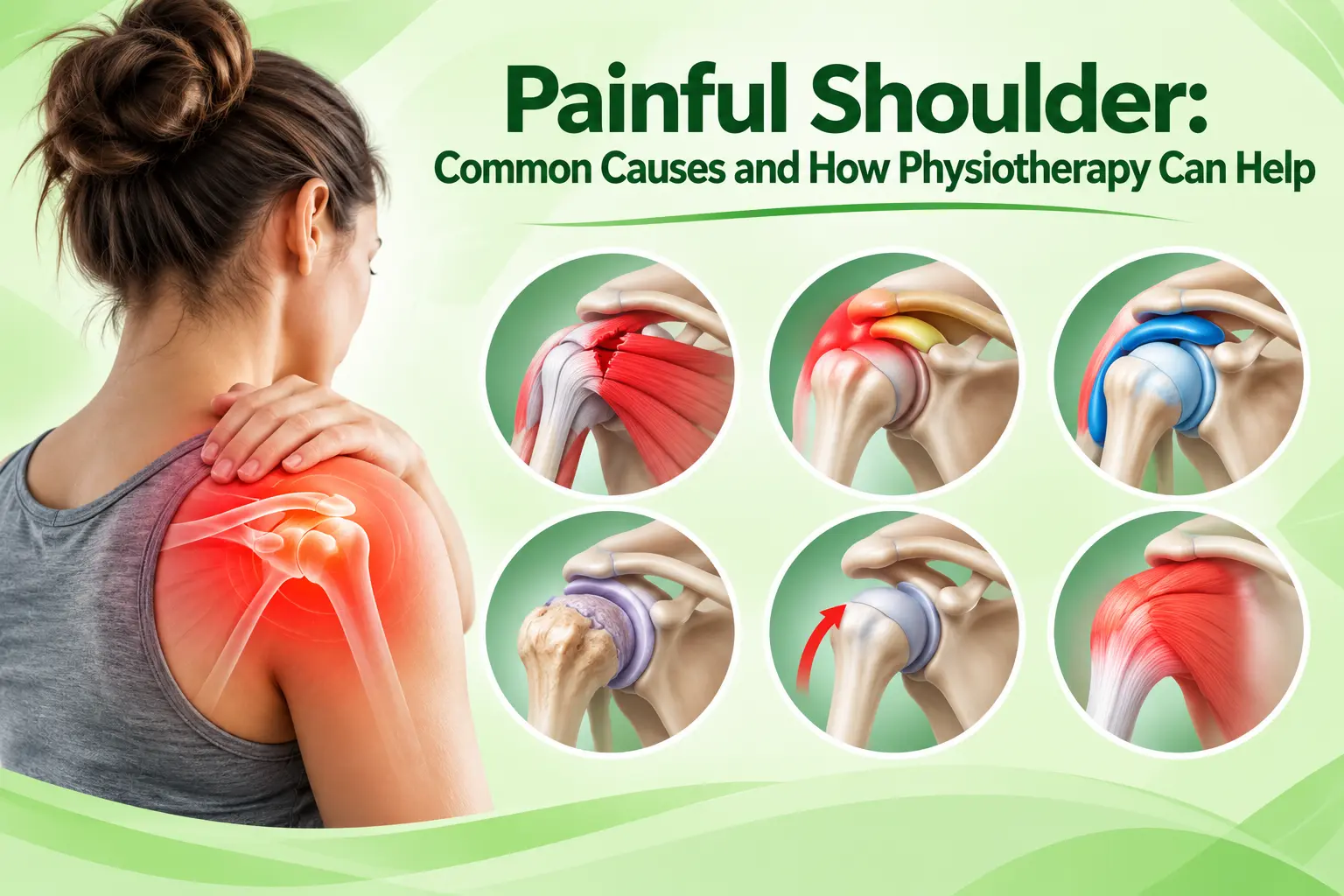
1. Shoulder Impingement / Rotator Cuff Strain
This is one of the most common injuries we see in people who bench press, shoulder press, do pull-ups, or train chest and shoulders aggressively.
Common Symptoms
- Pain lifting the arm overhead
- Sharp pain during pressing movements
- Clicking or pinching in the shoulder
- Weakness during pushing or pulling
- Pain when sleeping on that side
Why It Happens
- Poor scapular control
- Tight chest muscles
- Rotator cuff weakness
- Repetitive overhead loading
Physiotherapy Treatment
- Rotator cuff strengthening
- Scapular stabilization
- Mobility work for thoracic spine and shoulder
- Manual therapy
- Taping if needed
- Progressive return to pressing and pulling
2. Lower Back Strain
Back pain from deadlifts, squats, rows, or even poor core training is extremely common.
Common Symptoms
- Tightness in the lower back
- Pain during bending or lifting
- Muscle spasm
- Pain after leg day or deadlifts
- Stiffness after sitting
Why It Happens
- Poor bracing
- Weak core stability
- Fatigue-related breakdown in form
- Limited hip mobility
- Loading too heavy too quickly
Physiotherapy Treatment
- Movement assessment
- Core stabilization exercises
- Glute strengthening
- Hip mobility work
- Lifting pattern correction
- Gradual return-to-lift programming
3. Knee Pain (Patellofemoral Pain / Tendon Irritation)
A lot of gym-goers experience pain during squats, lunges, stairs, or leg press.
Common Symptoms
Why It Happens
- Poor squat mechanics
- Hip weakness
- Ankle stiffness
- Overuse
- Poor load management
Physiotherapy Treatment
- Quad and glute strengthening
- Squat form retraining
- Ankle mobility
- Taping support if appropriate
- Tendon loading progression
4. Elbow Pain (Golfer’s / Tennis Elbow from Lifting)
This is common in people doing heavy pulling, gripping, biceps work, or high-volume upper body training.
Common Symptoms
- Pain on the inner or outer elbow
- Pain gripping weights
- Pain during curls, pull-ups, or rows
- Weak grip strength
- Tight forearm muscles
Why It Happens
- Tendon overload
- Repetitive gripping
- Poor recovery
- Too much volume too quickly
Physiotherapy Treatment
5. Neck and Upper Trap Tension
This often happens with heavy shrugs, poor lifting posture, long desk hours plus gym, or excessive upper trap dominance.
Common Symptoms
- Neck stiffness
- Headaches after workouts
- Tight traps
- Pain turning the head
- Shoulder/neck tension after upper body days
Why It Happens
- Poor shoulder mechanics
- Over-bracing the neck
- Stress and tension
- Weak deep neck and scapular muscles
Physiotherapy Treatment
- Posture correction
- Neck mobility work
- Deep neck flexor strengthening
- Scapular retraining
- Manual therapy or dry needling if appropriate
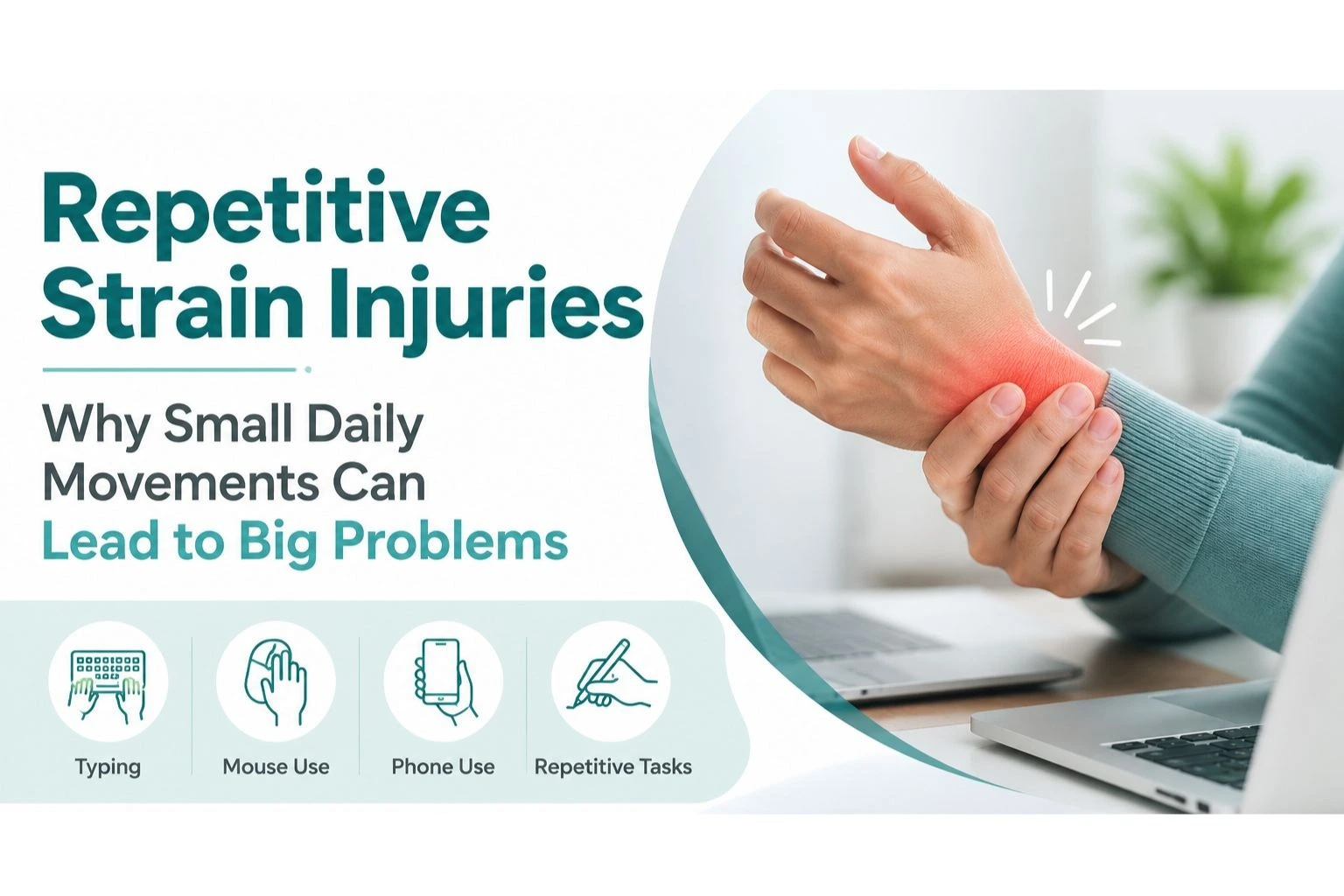
6. Wrist Pain
Common in push-ups, front squats, benching, handstands, and pressing movements.
Common Symptoms
- Pain bending the wrist back
- Pain during pressing or gripping
- Reduced range of motion
- Wrist tightness or instability
Physiotherapy Treatment
- Wrist mobility work
- Forearm strengthening
- Taping or support
- Technique changes for pressing positions
7. Hip Tightness and Glute Inhibition
A lot of people train hard but still don’t use their glutes well.
Common Symptoms
- Tight hips during squats
- Pinching in the front of the hip
- Low back taking over during leg work
- Glutes not “firing”
- Stiffness after training
Physiotherapy Treatment
- Hip mobility work
- Glute activation drills
- Squat/deadlift retraining
- Movement correction for hip-dominant exercises
When “Gym Soreness” Is Actually an Injury
Not all pain after training is normal.
Normal Training Soreness Usually Feels Like:
- Dull muscle ache
- Tightness 24–48 hours later
- Soreness that improves with movement
Injury Warning Signs Include:
- Sharp pain
- Swelling
- Pain during specific movements
- Joint instability
- Pain that keeps worsening
- Night pain
- Recurring pain every workout
If pain keeps returning, it usually means the issue is not just inflammation—it’s a movement or loading problem.
Physio Jimmy’s Approach to Gym Injury Treatment
At Townline Physiotherapy, the goal is not just to reduce pain—it is to get you back to training properly.
What Physiotherapy for Gym Injuries Should Include
1. Proper Assessment
We assess: movement patterns, lifting mechanics, mobility restrictions, strength deficits, side-to-side imbalances, and pain triggers.
2. Pain Reduction
Depending on the issue, treatment may include: manual therapy, soft tissue treatment, taping, dry needling, shockwave therapy, and mobility work.
3. Corrective Exercise
This is the most important long-term piece.
4. Return-to-Gym Progression
- Modify training
- Know what to avoid temporarily
- Know what you can still train
- Rebuild confidence safely
That is what good physiotherapy Abbotsford care should do.
Warm-Up: Why It Matters More Than Most People Think
One of the biggest mistakes gym-goers make is walking into the gym and going straight into heavy sets. A proper warm-up should do more than just raise body temperature. It should prepare your joints, muscles, and nervous system for the workout ahead.
Benefits of a Proper Warm-Up
- Increases blood flow
- Improves joint mobility
- Activates key muscles
- Improves lifting mechanics
- Reduces injury risk
- Improves performance
Physio Jimmy’s Simple Gym Warm-Up Formula
A good warm-up does not need to take 25 minutes. It just needs to be targeted.
1. General Warm-Up (3–5 minutes)
Treadmill walk, bike, rowing machine, incline walk, or light skipping or marching. Goal: increase body temperature and blood flow.
2. Mobility Warm-Up (3–5 minutes)
Hip openers, thoracic rotations, ankle mobility drills, arm circles, cat-cow, world’s greatest stretch. Goal: improve movement in the joints you are about to train.
3. Activation Warm-Up (3–5 minutes)
Glute bridges, band pull-aparts, mini-band side steps, scapular push-ups, dead bugs. Goal: “wake up” the muscles that should be doing the work.
4. Movement-Specific Warm-Up
Before heavy lifting, do 2–4 lighter sets first. Never jump from zero to your working weight. For example, if you are squatting 185 lbs, do: bodyweight squats → empty bar → 95 lbs → 135 lbs → then working sets. That alone prevents a lot of gym injuries.
Cool-Down: Why It Shouldn’t Be Ignored
A cool-down helps transition the body out of training mode and can improve recovery.
Benefits of a Cool-Down
- Helps reduce stiffness
- Improves mobility
- Promotes relaxation
- Helps the nervous system recover
- Gives you a chance to notice areas that are tightening up
Simple Cool-Down Routine (5–10 minutes)
- Slow walk or bike 2–3 minutes
- Gentle breathing
- Light full-body stretching
- Hydration
A cool-down does not need to be fancy. It just needs to be consistent.
Karvonen Formula for Safer Cardio Training
The Karvonen formula is a very useful way to determine target heart rate zones more accurately than using “220 minus age” alone.
It can be especially useful for: fat loss training, return to exercise after injury, cardio progression, conditioning safely, and avoiding overtraining.
Target Heart Rate = ((Max HR − Resting HR) × Intensity) + Resting HR
Step 1: Estimate Max Heart Rate
Max HR = 220 − age
Step 2: Measure Resting Heart Rate
Best taken in the morning before getting out of bed.
Step 3: Choose Training Intensity
- 50–60% = light recovery cardio
- 60–70% = moderate fat-burning / aerobic zone
- 70–80% = harder conditioning
- 80–90% = intense interval training (not for everyone)
Example
Age = 35 | Max HR = 185 | Resting HR = 65 | Desired intensity = 70%
Target HR = ((185 − 65) × 0.70) + 65 = 84 + 65 = 149 bpm
This can be very helpful for patients returning to exercise after injury who tend to either do too little or go way too hard too fast.
Full Body Stretching Program for Gym Recovery
A simple and consistent stretching routine can help reduce tightness, improve mobility, and support better movement quality in the gym. A useful full-body follow-along option is this Bob & Brad YouTube routine.
Strength Still Matters More Than Stretching Alone
One mistake people make is stretching the same painful area over and over without fixing the real issue. For example:
- Tight hip flexors often need glute strengthening
- Tight shoulders often need scapular control
- Recurring back tightness often needs core and hip stability
- Hamstring tightness often needs pelvic control and load management
That’s why the best results usually come from a combination of mobility + strength + movement correction.
When Should You See a Physiotherapist for Gym Pain?
You should book a physiotherapy Abbotsford assessment if:
- Pain lasts more than 1–2 weeks
- The same injury keeps coming back
- You cannot train normally
- Pain affects sleep
- You feel weak or unstable
- Your form keeps breaking down
- Your mobility is limiting your lifts
The sooner you deal with a gym injury properly, the less likely it is to become chronic.
Final Thoughts from Physio Jimmy
Gym injuries can be frustrating, but they usually do not mean you have to stop training completely. Most of the time, they mean your body is asking for better movement, smarter loading, and proper recovery.
At Townline Physiotherapy, our goal is not just to help you feel better—it is to help you move better, lift better, and train with confidence again.
If you’re dealing with shoulder pain, knee pain, lower back strain, elbow pain, hip tightness, or recurring workout injuries, physiotherapy Abbotsford treatment can help identify the root cause and build a proper plan for recovery and performance.
FAQs
1) Can physiotherapy help gym injuries?
Yes. Physiotherapy can help reduce pain, improve movement, restore strength, and guide a safe return to training.
2) Should I stop going to the gym if I’m injured?
Not always. Many injuries can be modified and trained around safely with the right plan.
3) What is the Karvonen formula used for?
The Karvonen formula helps calculate target heart rate zones for cardio training based on your age and resting heart rate.
4) How long should a warm-up be before lifting?
A good warm-up is usually 8–15 minutes, depending on the workout and your injury history.
5) Is stretching before the gym good?
Dynamic mobility and movement prep are usually better before training than long static stretching.
6) What is the best cool-down after a workout?
A short walk, breathing, hydration, and 5–10 minutes of stretching is a good simple cool-down.
7) Why do I keep getting injured in the gym?
Recurring injuries often come from poor mechanics, weak stabilizers, poor mobility, overload, or returning too fast after pain.