Back pain, leg pain, neck pain, numbness, and tingling are some of the most common reasons people seek physiotherapy. One of the biggest challenges patients face is understanding whether their symptoms are coming from spinal stenosis or a disc injury.
At
Townline Physiotherapy in Abbotsford, conveniently located near Highstreet Shopping Centre, we frequently assess and treat patients with spinal conditions affecting the neck and lower back. Understanding the differences between these conditions can help guide proper treatment and recovery.
Understanding the Spine
Your spine consists of:
- Vertebrae (bones)
- Intervertebral discs (shock absorbers)
- Nerves
- Ligaments
- Muscles
When discs or spinal joints become damaged or degenerate, they may compress nearby nerves and cause pain, numbness, weakness, or mobility limitations.
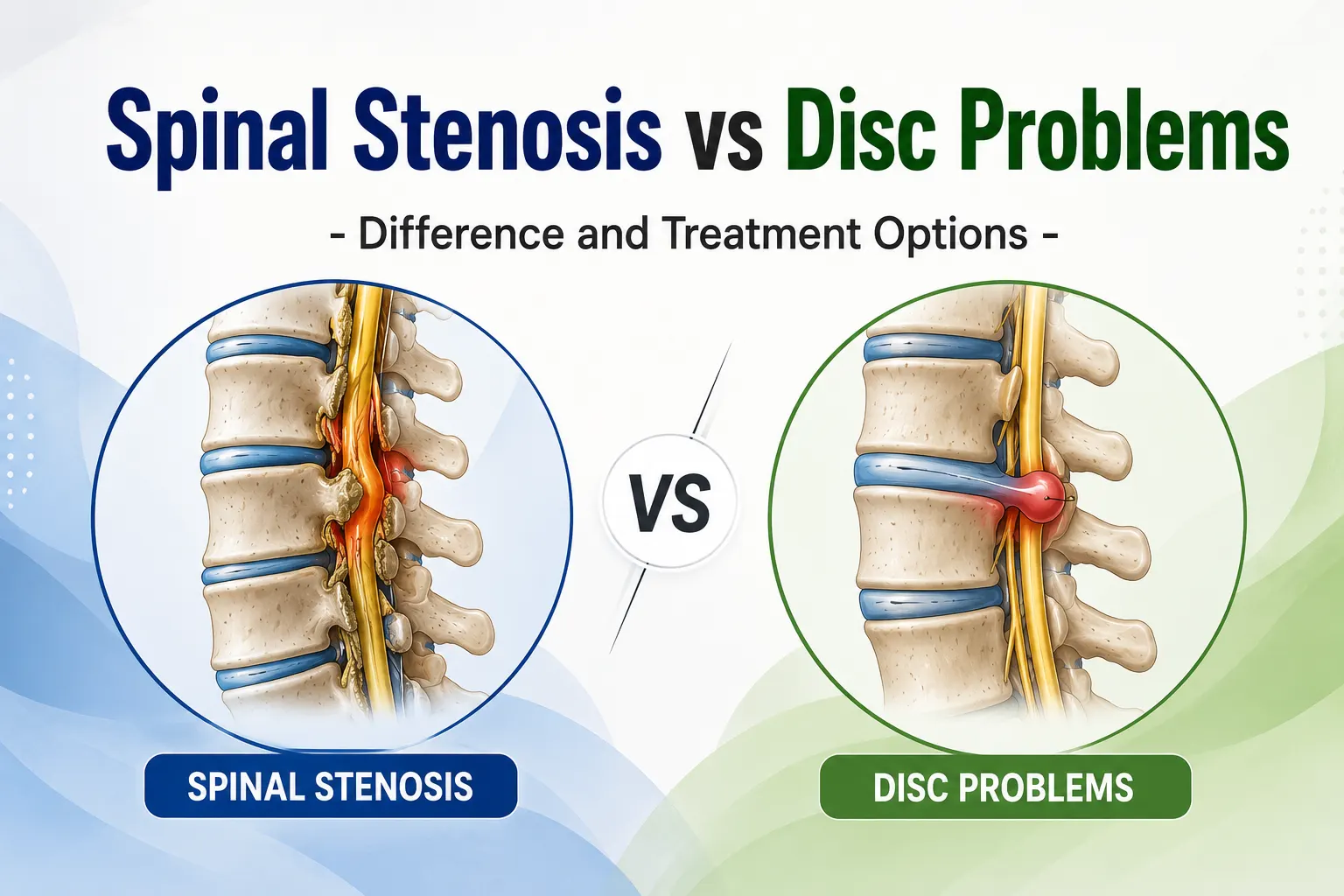
What is Spinal Stenosis?
Spinal stenosis occurs when the spaces within the spinal canal become narrowed, placing pressure on the spinal cord or nerves.
It commonly develops gradually due to:
- Age-related degeneration
- Arthritis
- Thickened ligaments
- Bone spurs
- Degenerative disc disease
Common Symptoms of Lumbar Stenosis
Classic Sign of Lumbar Spinal Stenosis
Many patients report: “I can walk farther when leaning on a shopping cart.”
This is because flexion opens the spinal canal and reduces nerve compression.
What is a Disc Problem?
A disc injury occurs when the disc material protrudes or leaks, irritating nearby nerves.
Disc injuries often occur due to:
- Heavy lifting
- Repetitive bending
- Poor posture
- Sudden twisting injuries
- Motor vehicle accidents
Common Symptoms of Disc Injuries
- Sharp back or neck pain
- Pain radiating into the arm or leg
- Sciatica
- Tingling
- Numbness
- Muscle weakness
Unlike stenosis, disc symptoms often worsen with prolonged sitting and bending.
Stages of Disc Injury
Stage 1: Disc Bulge
A disc bulge occurs when the outer disc fibers remain intact, but the disc extends outward beyond its normal boundary.
Symptoms:
- Mild back pain
- Occasional stiffness
- Intermittent nerve irritation
Many disc bulges are painless and found incidentally on MRI scans.
Stage 2: Disc Protrusion
The disc pushes further outward but remains contained within the outer annulus.
Symptoms:
- Increased back pain
- Nerve irritation
- Leg or arm symptoms
Stage 3: Disc Extrusion
The inner disc material breaks through the outer fibers but remains connected to the disc.
Symptoms:
- Significant nerve compression
- Sciatica
- Leg weakness
- Increased pain
Extrusions often produce more severe symptoms than simple bulges.
Stage 4: Disc Sequestration
A fragment of disc material completely separates from the main disc.
Symptoms:
- Severe nerve irritation
- Significant leg or arm pain
- Numbness
- Weakness
This represents the most advanced stage of disc herniation.
Cervical Disc Problems
Disc injuries can also occur in the neck.
Symptoms may include:
- Neck pain
- Arm pain
- Hand numbness
- Shoulder blade pain
- Tingling into the fingers
Exercises for Lumbar Stenosis
Important: Exercises should only be performed after assessment by a qualified physiotherapist, as not every exercise is appropriate for every patient.
Common stenosis exercises include:
Single Knee-to-Chest
- Lie on your back
- Pull one knee toward your chest
- Hold for 20 seconds
Double Knee-to-Chest
- Pull both knees toward your chest
- Hold for 20 seconds
Posterior Pelvic Tilts
- Flatten your lower back into the bed
- Tighten abdominal muscles
Stationary Cycling
Many stenosis patients tolerate cycling better than walking because of the forward-flexed posture.
Exercises for Disc Injuries
Disc-related exercises depend on the direction of disc displacement and symptom presentation.
Commonly prescribed exercises may include:
Prone Press-Ups (McKenzie Extension)
- Lie on your stomach
- Push up onto your elbows or hands
- Allow the back to gently extend
Standing Back Extensions
- Place hands on hips
- Gently lean backward
Core Stabilization Exercises
- Transverse abdominis activation
- Dead bug exercises
- Bird dog exercises
Note: Some disc injuries worsen with flexion-based exercises. Professional assessment is essential before beginning any exercise program.
How a Lumbosacral Belt Helps
A lumbosacral support belt may provide temporary support during acute flare-ups.
Benefits include:
- Reduced spinal loading
- Improved posture awareness
- Enhanced comfort during daily activities
- Reduced muscle strain
However, long-term reliance should be avoided because it may weaken supporting muscles.
How a Cervical Collar Helps
A cervical collar may occasionally be recommended for acute neck injuries.
Benefits include:
- Reduced neck movement
- Temporary symptom relief
- Support during acute inflammation
Collars are generally used for short periods only and should not replace rehabilitation exercises.
How Physiotherapy Helps Spinal Stenosis and Disc Problems
At Townline Physiotherapy, treatment may include:
- Comprehensive spinal assessment
- Manual therapy
- Exercise prescription
- Postural correction
- Core strengthening
- Nerve mobility exercises
- Education on lifting mechanics
- Return-to-work planning
Our goal is to reduce pain, improve function, and help patients avoid unnecessary surgery whenever possible.
When Should You Seek Immediate Medical Attention?
Seek urgent medical evaluation if you experience:
- Loss of bowel or bladder control
- Progressive leg weakness
- Saddle numbness
- Severe unexplained weakness
These symptoms may indicate a serious neurological condition requiring immediate medical care.
Why Choose Townline Physiotherapy in Abbotsford?
Located conveniently near Highstreet Shopping Centre, Townline Physiotherapy provides evidence-based treatment for:
- Spinal stenosis
- Sciatica
- Disc herniations
- Neck pain
- Back pain
- Nerve-related symptoms
Our team develops individualized treatment plans based on your symptoms, imaging findings, and functional goals.
Frequently Asked Questions
Can a disc bulge heal naturally?
Many disc bulges improve significantly over time with proper physiotherapy, exercise, and activity modification.
Is spinal stenosis the same as sciatica?
No. Stenosis refers to narrowing around nerves, while sciatica describes symptoms caused by irritation of the sciatic nerve.
Do all disc bulges require surgery?
No. Most disc injuries respond well to conservative treatment, including physiotherapy and exercise.
Is walking good for spinal stenosis?
Walking can be beneficial, but symptoms may need to be managed with a gradual progression program and specific exercises.
Should I wear a back belt all day?
No. Back belts are generally intended for short-term support and should not replace strengthening exercises.
Can physiotherapy help avoid surgery?
Many patients improve significantly with physiotherapy and may avoid or delay surgical intervention.
How do I know if I have stenosis or a disc problem?
A thorough assessment by a physiotherapist, chiropractor, or physician is required to accurately identify the source of symptoms.
Book Your Assessment at Townline Physiotherapy in Abbotsford Today
If you are experiencing back pain, sciatica, spinal stenosis symptoms, or a suspected disc injury, the team at Townline Physiotherapy in Abbotsford can help identify the source of your symptoms and develop a personalized treatment plan.
Professional assessment is essential before beginning any exercise program to ensure exercises are appropriate for your specific condition and stage of recovery.