
FAQ
1.Can a seatbelt cause costochondritis?
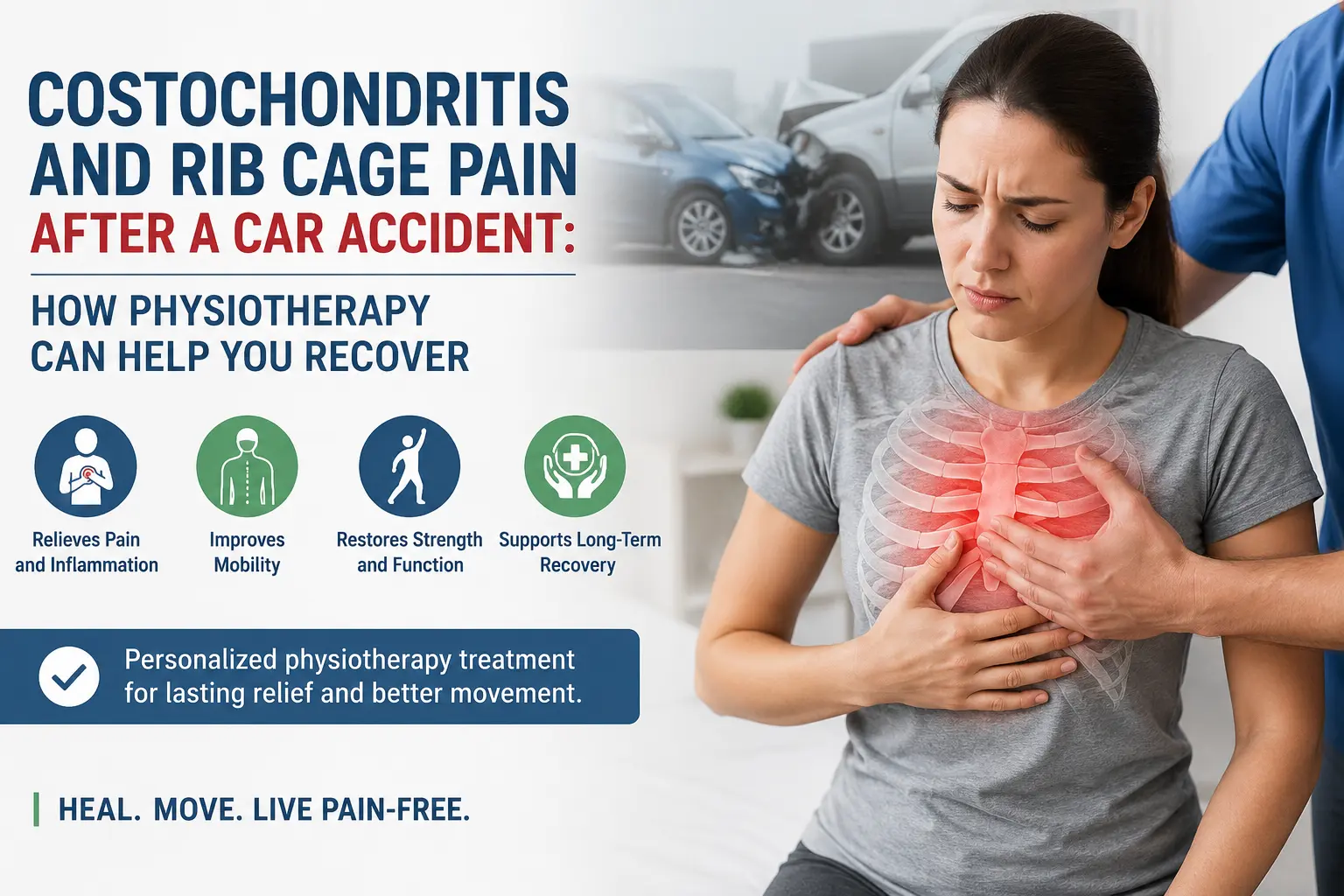
Yes. The force of a seatbelt during a collision can place significant pressure on the chest wall, leading to inflammation of the rib cartilage and surrounding soft tissues.
2.Can an airbag cause rib cage pain?
Yes. Airbag deployment can bruise the chest, strain muscles, and contribute to rib cartilage irritation or costochondritis. Most injuries improve with appropriate treatment, but persistent pain should be evaluated.
3.How long does costochondritis last after a car accident?
Recovery varies depending on the severity of the injury. Mild cases may improve within a few weeks, while more significant injuries can take several weeks to a few months. Early physiotherapy may help improve mobility and support recovery.
4.Is walking good for rib cage pain?
Gentle walking is often beneficial if it does not significantly increase your pain. Staying active within your tolerance can help maintain circulation and prevent stiffness. Your physiotherapist can advise you on appropriate activity levels.
5.Does cold laser therapy help costochondritis?
Cold laser therapy may help reduce pain and inflammation and support tissue healing. It is typically used as part of a comprehensive physiotherapy treatment plan that also includes manual therapy and exercise.
6.Can I receive physiotherapy through ICBC?
Yes. If your rib or chest pain is related to a motor vehicle accident in British Columbia, you may be eligible for ICBC-approved physiotherapy. Our team can assist you with the process and provide direct billing where applicable.