
Rib Cage Pain abbotsford

June 30, 2026

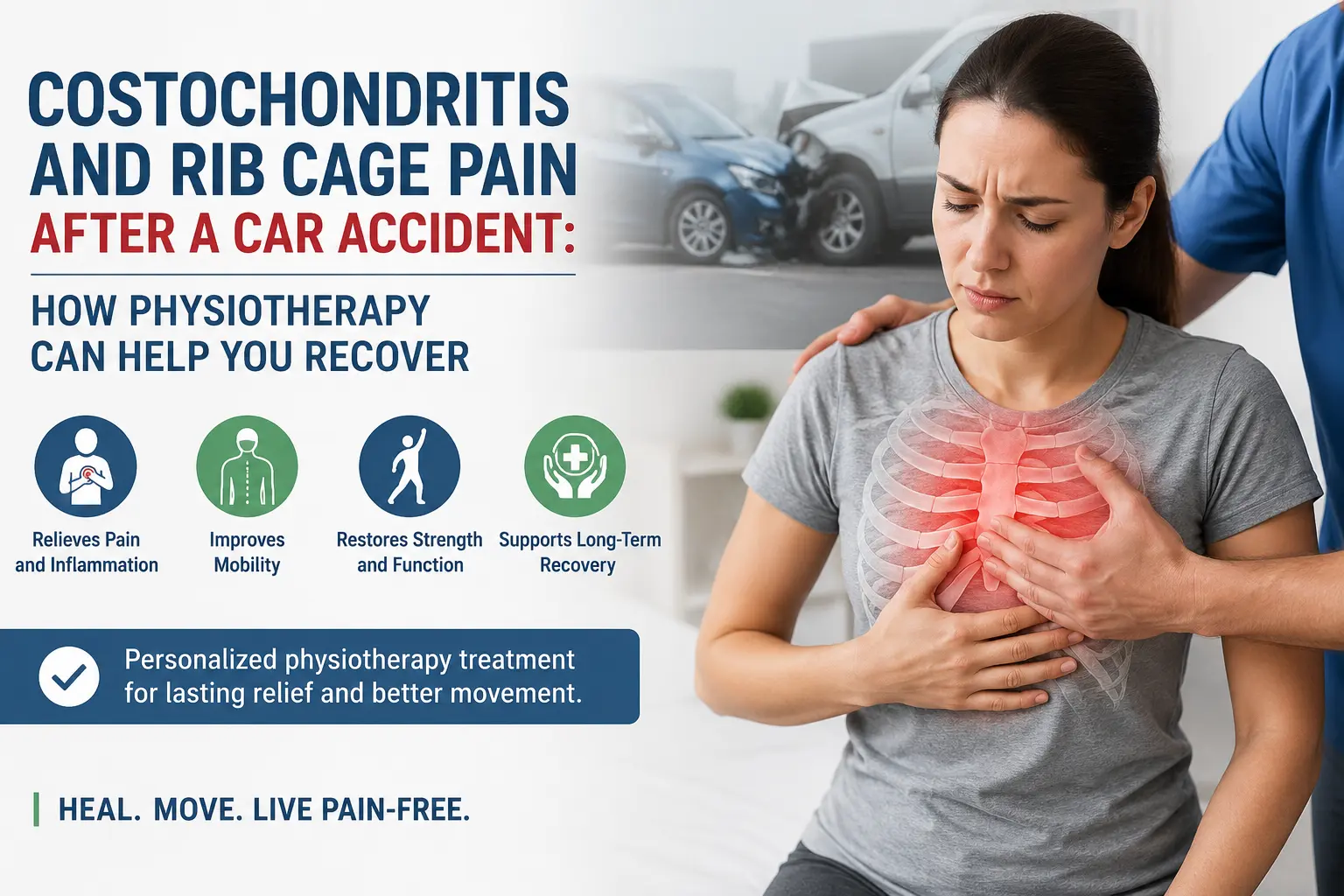
Rib cage pain after a motor vehicle accident (MVA) is more common than many people realize. Even if X-rays show no broken ribs, the force of a collision, seatbelt restraint, or airbag deployment can cause inflammation of the cartilage connecting your ribs to your breastbone—a condition known as costochondritis. Chest wall injuries can make everyday activities like breathing, coughing, laughing, sleeping, or reaching overhead surprisingly painful.At Townline Physiotherapy Abbotsford, our experienced physiotherapists assess and treat rib injuries, chest wall pain, and costochondritis following ICBC motor vehicle accidents. Using evidence-based physiotherapy techniques, including cold laser therapy, manual therapy, exercise rehabilitation, and education, we help patients reduce pain and return to normal activities safely.

What Is Costochondritis?

Costochondritis is the inflammation of the cartilage where your ribs attach to your sternum (breastbone). This inflammation causes localized chest pain that often worsens with movement or deep breathing. Although it is not a heart condition, the pain can feel alarming and may mimic cardiac symptoms. It is important to seek medical attention immediately if you experience sudden chest pain and are unsure of the cause. Once serious medical conditions have been ruled out, physiotherapy can play a significant role in recovery.

Can a Car Accident Cause Costochondritis?

Yes. Costochondritis frequently develops after trauma to the chest. Common causes include:
  • Seatbelt compression during a collision
  • Airbag deployment impacting the chest
  • Direct impact against the steering wheel
  • Sudden twisting of the torso during a crash
  • Heavy lifting after the accident
  • Falls or sports injuries
Even low-speed collisions can create enough force to irritate the rib joints and surrounding muscles.

Airbag Injury to the Chest After an ICBC Accident

Airbags save lives by reducing severe injuries, but they can also cause temporary chest injuries due to the force of deployment. Patients commonly experience:
  • Chest tenderness
  • Bruising
  • Rib cage pain
  • Pain when coughing or sneezing
  • Difficulty taking deep breaths
  • Muscle strain around the chest
  • Costochondritis
  • Intercostal muscle injuries
If your chest pain continues for several days after an ICBC accident, it is important to have a thorough assessment to determine whether the pain is coming from your ribs, cartilage, muscles, or thoracic spine. At Townline Physiotherapy Abbotsford, we provide comprehensive ICBC physiotherapy assessments to identify the exact source of your pain and create an individualized treatment plan.

Common Symptoms of Costochondritis

Symptoms may include:
  • Sharp or aching pain near the breastbone
  • Pain on one or both sides of the chest
  • Tenderness when pressing on the ribs
  • Pain during deep breathing
  • Pain while coughing or sneezing
  • Pain when twisting or reaching overhead
  • Discomfort during sleeping or changing positions
  • Pain after prolonged sitting
Many patients notice symptoms becoming worse with certain movements but improving with rest.

Physiotherapy Treatment for Rib Cage Pain

Every patient recovers differently, which is why treatment should be individualized. Your physiotherapy program may include:

Comprehensive Assessment

We assess:
  • Rib mobility
  • Breathing mechanics
  • Thoracic spine movement
  • Shoulder function
  • Muscle strength
  • Posture
  • Chest wall tenderness
Understanding the source of your pain allows us to develop an effective treatment plan.

Manual Therapy

Gentle hands-on techniques help:
  • Improve rib mobility
  • Reduce muscle tension
  • Restore thoracic movement
  • Decrease stiffness
  • Improve posture

Cold Laser Therapy for Costochondritis

Cold laser therapy (Low-Level Laser Therapy) is a non-invasive treatment that may help reduce inflammation and stimulate tissue healing. Potential benefits include:
  • Reduced inflammation
  • Pain relief
  • Improved tissue healing
  • Increased circulation
  • Faster recovery
  • Drug-free treatment option
Cold laser therapy is often combined with manual therapy and exercise for optimal results.

Therapeutic Exercises

As your symptoms improve, your physiotherapist may prescribe exercises to:
  • Improve posture
  • Restore chest mobility
  • Strengthen supporting muscles
  • Improve shoulder mechanics
  • Increase thoracic flexibility
  • Prevent future flare-ups

Should You Ice Rib Cage Pain?

Yes, icing can help during the first few days after an injury. General recommendations:
  • Apply ice for 15–20 minutes at a time.
  • Repeat every 2–3 hours during the first 48–72 hours, if appropriate.
  • Place a thin towel between the ice pack and your skin.
  • Avoid falling asleep with ice applied.
After the acute phase, your physiotherapist may recommend heat, mobility exercises, or other treatments depending on your stage of healing.

Tips for Recovery

During recovery:
  • Avoid activities that significantly increase your pain.
  • Maintain good posture.
  • Practice gentle deep breathing exercises if advised.
  • Gradually return to activity under professional guidance.
  • Follow your prescribed home exercise program.
  • Attend scheduled physiotherapy appointments.

Why Choose Townline Physiotherapy Abbotsford?

At Townline Physiotherapy Abbotsford, we provide personalized care for patients recovering from ICBC motor vehicle accidents. Our clinic offers:
  • Comprehensive physiotherapy assessments
  • ICBC direct billing
  • Cold laser therapy
  • Manual therapy
  • Exercise rehabilitation
  • Individualized treatment plans
  • Experienced physiotherapists
  • One-on-one patient care
Our goal is to help you recover safely, reduce pain, and return to work, sports, and everyday activities with confidence.

FAQ

1.Can a seatbelt cause costochondritis?
Yes. The force of a seatbelt during a collision can place significant pressure on the chest wall, leading to inflammation of the rib cartilage and surrounding soft tissues.
2.Can an airbag cause rib cage pain?
Yes. Airbag deployment can bruise the chest, strain muscles, and contribute to rib cartilage irritation or costochondritis. Most injuries improve with appropriate treatment, but persistent pain should be evaluated.
3.How long does costochondritis last after a car accident?
Recovery varies depending on the severity of the injury. Mild cases may improve within a few weeks, while more significant injuries can take several weeks to a few months. Early physiotherapy may help improve mobility and support recovery.
4.Is walking good for rib cage pain?
Gentle walking is often beneficial if it does not significantly increase your pain. Staying active within your tolerance can help maintain circulation and prevent stiffness. Your physiotherapist can advise you on appropriate activity levels.
5.Does cold laser therapy help costochondritis?
Cold laser therapy may help reduce pain and inflammation and support tissue healing. It is typically used as part of a comprehensive physiotherapy treatment plan that also includes manual therapy and exercise.
6.Can I receive physiotherapy through ICBC?
Yes. If your rib or chest pain is related to a motor vehicle accident in British Columbia, you may be eligible for ICBC-approved physiotherapy. Our team can assist you with the process and provide direct billing where applicable.

Book Your ICBC Physiotherapy Assessment Today

If you’re experiencing costochondritis, rib cage pain, or chest discomfort after a motor vehicle accident, early assessment and treatment can help you recover safely and regain your quality of life. Townline Physiotherapy Abbotsford offers comprehensive assessments, evidence-based physiotherapy, cold laser therapy, and personalized rehabilitation programs for patients recovering from ICBC injuries.

Recent Posts