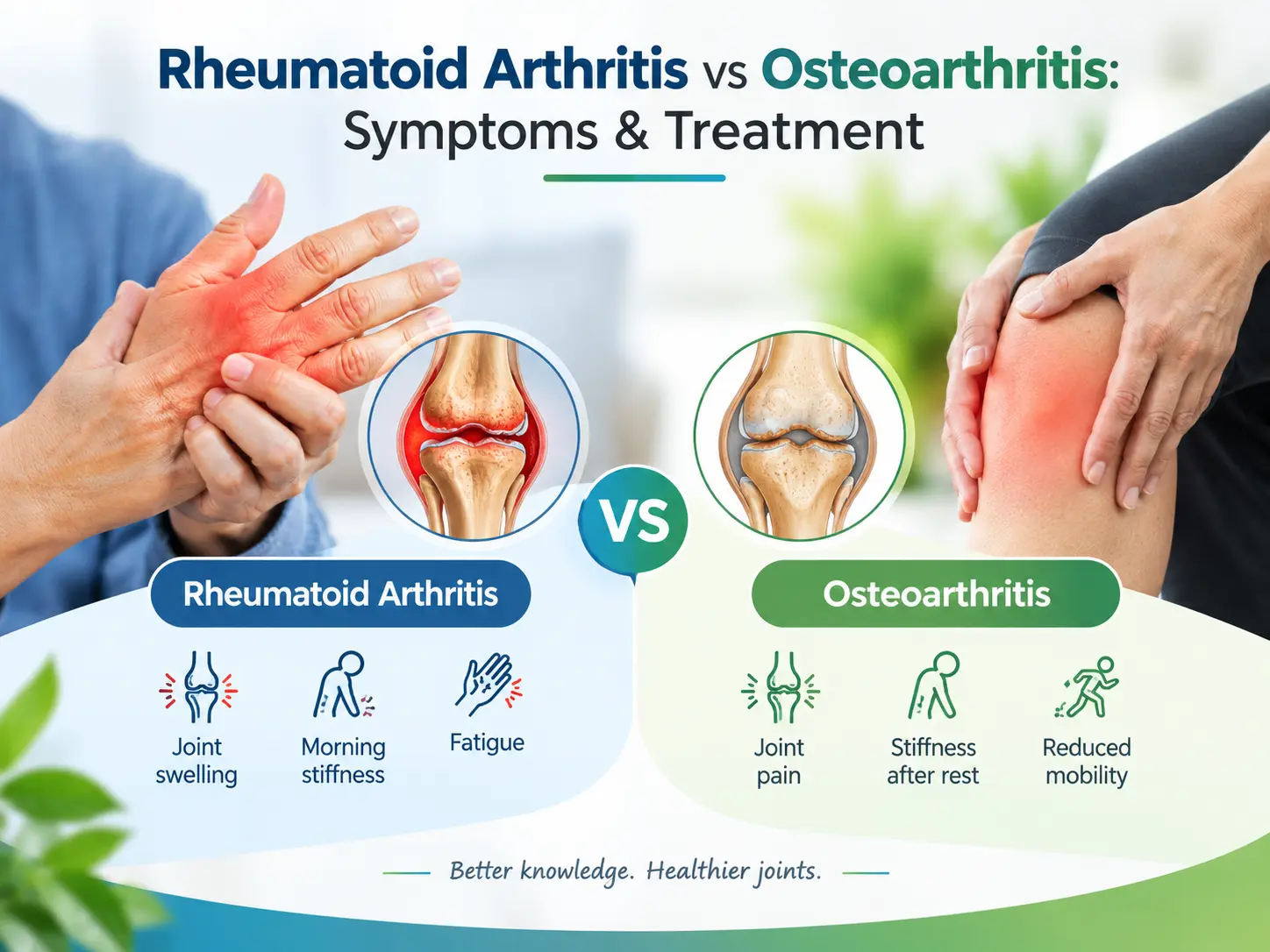
Joint pain, stiffness and reduced mobility can occur with both rheumatoid arthritis and osteoarthritis, but these conditions are not the same. Understanding the difference is important because their causes, symptoms and medical management differ.
Osteoarthritis is primarily associated with changes in the cartilage, bone and other tissues within a joint. Rheumatoid arthritis is an autoimmune inflammatory disease in which the immune system mistakenly attacks healthy tissue, particularly the lining of the joints.
Physiotherapy can help people with either condition maintain movement, build strength and manage functional limitations. However, physiotherapy does not replace the medical treatment required to control rheumatoid arthritis.
Rheumatoid Arthritis vs. Osteoarthritis: Key Differences
Feature
Osteoarthritis
Rheumatoid arthritis
Type of condition
Degenerative joint disease involving the entire joint
Autoimmune inflammatory disease
Commonly affected joints
Knees, hips, hands, spine and feet
Hands, wrists, feet, knees and other joints
Pattern
May affect one joint or one side more than the other
Frequently affects similar joints on both sides
Morning stiffness
Often shorter and improves after moving
Frequently prolonged and may last more than 30–60 minutes
Pain pattern
Often aggravated by prolonged or repetitive activity
May be present during rest and activity, particularly during a flare
Swelling
Can occur around the affected joint
Inflammatory swelling, warmth and tenderness are common
Other symptoms
Reduced mobility, joint noises and functional difficulty
Fatigue, reduced energy, fever or a general feeling of being unwell may occur
Medical management
Exercise, education, weight management when appropriate, medication and other interventions
Early medical assessment and disease-modifying medication, supported by exercise and rehabilitation
These patterns can help guide an assessment, but symptoms alone cannot confirm which type of arthritis someone has. A physician or rheumatologist may use a clinical examination, blood tests and imaging when necessary.
What Is Osteoarthritis?
Osteoarthritis, often abbreviated as OA, is the most common form of arthritis. It is sometimes described simply as “wear and tear,” but that description is incomplete. Osteoarthritis involves changes to several joint structures, including cartilage, bone, ligaments and surrounding muscles.
It can develop following previous injury, repetitive joint loading, age-related changes or a combination of factors. Genetics, muscle weakness, body weight and joint alignment can also influence the condition.
Common Symptoms of Osteoarthritis
Osteoarthritis symptoms may include:
Joint pain during or after activity
Stiffness after sitting or resting
Reduced joint movement
Tenderness around the joint
Mild or moderate swelling
Grinding, clicking or cracking sensations
Reduced leg or hand strength
Difficulty walking, climbing stairs, gripping or completing daily activities
Symptoms do not always correspond directly with X-ray findings. Some people have visible joint changes with relatively few symptoms, while others experience considerable pain and limitation.
What Is Rheumatoid Arthritis?
Rheumatoid arthritis, or RA, is a chronic autoimmune condition. The immune system attacks the lining of the joints, creating inflammation that can cause pain, warmth, swelling and stiffness.
RA can affect more than the joints. Some people also experience significant fatigue or symptoms involving other body systems. Prompt medical assessment is important because early treatment can help control inflammation and reduce the risk of progressive joint damage.
Common Symptoms of Rheumatoid Arthritis
Possible RA symptoms include:
Pain and swelling in multiple joints
Warm or tender joints
Prolonged morning stiffness
Similar joints affected on both sides of the body
Hand, wrist or foot stiffness
Fatigue or reduced energy
Periods of increased symptoms known as flares
Periods when symptoms are less active
Progressive difficulty using the hands or completing daily activities
See a physician if unexplained pain, swelling or morning stiffness continues for several weeks, especially when multiple joints or both sides of the body are involved.
A newly hot, red and severely painful joint—particularly when accompanied by fever or illness—requires prompt medical assessment.
Can Physiotherapy Help Arthritis?
Physiotherapy cannot cure osteoarthritis or rheumatoid arthritis, but it can help address the physical problems associated with these conditions.
Following an assessment, physiotherapy treatment may focus on:
Improving joint mobility
Building the strength of muscles that support painful joints
Improving balance and walking ability
Gradually increasing activity tolerance
Managing stiffness
Improving confidence with movement
Modifying activities that repeatedly aggravate symptoms
Teaching joint-protection and pacing strategies
Developing an individualized home-exercise program
Supporting a safe return to work, recreation or exercise
For rheumatoid arthritis, physiotherapy should complement medical treatment from a physician or rheumatologist. Exercise helps maintain function, but it does not control the underlying autoimmune disease in the way disease-modifying medication can.
Physiotherapy for Osteoarthritis
Exercise is one of the principal non-surgical treatments for osteoarthritis. The appropriate program depends on which joint is affected, the person’s strength, general health and current level of function.
A physiotherapy program may combine mobility exercises, progressive strengthening, balance training and cardiovascular activity. Manual therapy or other treatments may occasionally be used to help someone participate more comfortably in active rehabilitation.
The long-term objective is not simply to provide temporary symptom relief. It is to improve the joint’s capacity for daily activities by progressively improving strength, mobility and confidence.
Physiotherapy During a Rheumatoid Arthritis Flare
Exercise may need to be modified when joints are actively swollen, warm or considerably more painful.
During a flare, treatment may emphasize:
Gentle, comfortable range-of-motion exercises
Short periods of light activity
Position changes to prevent prolonged stiffness
Pacing and energy-conservation strategies
Temporary reduction of resistance or impact
Maintaining movement without heavily loading an inflamed joint
When inflammation is better controlled, strengthening and aerobic exercise can usually be progressed gradually.
Completely avoiding movement for extended periods can contribute to weakness and stiffness. However, aggressively exercising a hot and swollen joint is also inappropriate. A physiotherapist can help determine how much activity is suitable at different stages.
Exercises That May Help Osteoarthritis
The following are general examples and may not be appropriate for every person.
1. Sit-to-Stand
Sit near the front of a stable chair with your feet positioned comfortably. Lean forward slightly and stand using your leg muscles. Slowly return to sitting.
This exercise can help improve thigh and hip strength for getting out of chairs and climbing stairs.
2. Quadriceps Setting
Sit or lie with the affected leg supported. Gently tighten the muscle at the front of the thigh by pressing the knee toward the supporting surface. Hold briefly and relax.
This can be useful when knee pain makes loaded strengthening difficult.
3. Bridge
Lie on your back with your knees bent. Tighten your abdominal and buttock muscles, then gently lift your hips. Avoid arching excessively through the lower back.
Bridges can help strengthen the hip and trunk muscles that support walking and lower-limb function.
4. Supported Heel Raises
Stand while holding a countertop or stable chair. Slowly rise onto the balls of your feet and lower with control.
This exercise helps develop calf strength and may support walking and balance.
5. Step-Ups
Using a low, stable step and a railing for support, step up and then return slowly to the starting position.
Step height and repetitions should be adjusted according to pain, balance and strength.
6. Low-Impact Cardiovascular Exercise
Walking, stationary cycling, pool exercise and other low-impact activities can help improve endurance and general health. Begin with a manageable duration and increase gradually.
Exercises That May Help Rheumatoid Arthritis
1. Gentle Hand Opening and Closing
Slowly open the hand, spreading the fingers comfortably. Then gently close the fingers without squeezing forcefully.
2. Wrist Movement
With the forearm supported, slowly move the wrist upward and downward within a comfortable range.
3. Seated Knee Extension
Sit in a stable chair. Slowly straighten one knee, pause briefly and lower the foot with control.
4. Shoulder-Blade Setting
Sit or stand upright. Gently draw the shoulder blades backwards and slightly downward without shrugging.
5. Gentle Walking or Cycling
Short sessions of comfortable aerobic activity can help maintain endurance. The duration and intensity may need to be reduced during a flare or period of marked fatigue.
6. Light Resistance Exercise
When inflammation is controlled, carefully progressed resistance training can help reduce weakness. Resistance bands, body-weight exercises or light weights may be used after assessing the affected joints.
A common starting point is one or two sets of comfortable repetitions, but exercise dosage should be individualized. Stop and seek advice if an exercise causes severe pain, increasing warmth or swelling, loss of function, dizziness or symptoms that remain substantially worse the following day.
Can Laser Therapy Help Arthritis?
Low-level laser therapy—also called photobiomodulation or cold laser therapy—uses specific wavelengths of light applied to the treatment area.
Research suggests that appropriately dosed low-level laser therapy may provide short-term improvement in pain or function for some people with knee osteoarthritis. However, study results and treatment guidelines are not completely consistent.
Laser therapy should therefore be considered an optional adjunct rather than the principal treatment. It should not replace exercise, education, medical care or appropriate medication.
The evidence is less clear for using laser therapy to manage rheumatoid arthritis. Because RA is an autoimmune disease, laser treatment cannot control its underlying disease activity or replace assessment by a physician or rheumatologist.
At Townline Physiotherapy, BioFlex laser therapy may be considered after an individual assessment when it is appropriate for the person’s condition and treatment goals.
Laser therapy may not be suitable over certain cancers, areas of impaired sensation, the eyes, an actively bleeding area or other contraindicated regions. Tell your clinician about your medical conditions, medications and any change in symptoms before treatment.
Can Taping Help Arthritis?
Taping may be used temporarily to:
Support an irritated joint
Modify kneecap position or loading in selected cases of knee osteoarthritis
Improve awareness of joint position
Provide short-term assistance during walking or exercise
Support a painful hand, wrist, knee or foot during specific activities
Both elastic kinesiology tape and more rigid taping techniques are available. Research concerning taping for knee osteoarthritis is mixed, and the effect varies between individuals. Taping should be viewed as a short-term tool that may make exercise or daily activity more comfortable—not as a treatment that repairs cartilage or stops arthritis.
Tape should not be applied over broken, infected or significantly irritated skin. It should be removed if it causes itching, blistering, increased pain or skin discolouration.
Managing Arthritis at Home
Useful strategies may include:
Break large tasks into shorter periods
Change position regularly instead of remaining still for long periods
Use heat for general stiffness when appropriate
Use cold for short-term symptom relief around a swollen or irritated joint when appropriate
Wear supportive footwear
Increase exercise gradually
Alternate heavier and lighter activities
Maintain regular physical activity instead of cycling between overactivity and complete rest
Follow the medication plan provided by your physician
Discuss persistent swelling or worsening symptoms with a healthcare professional
Frequently Asked Questions
Is rheumatoid arthritis worse than osteoarthritis?
Neither condition is automatically “worse.” Their effects vary considerably between individuals. Rheumatoid arthritis can cause systemic inflammation and requires medical treatment to control disease activity. Osteoarthritis can also cause considerable pain and disability, particularly when major weight-bearing joints are involved.
Can physiotherapy cure rheumatoid arthritis or osteoarthritis?
No. Physiotherapy does not cure either condition. It can help improve mobility, strength, physical function and the ability to manage everyday activities.
Should I exercise when arthritis is painful?
Some movement is often beneficial, but the program may need to be modified. Gentle discomfort during exercise is different from severe pain, increasing joint warmth or significant swelling. A physiotherapist can help determine an appropriate starting level.
What exercises are best for knee osteoarthritis?
Programs frequently include quadriceps and hip strengthening, sit-to-stand practice, balance exercises, walking or cycling and gradual functional training. The best exercises depend on your symptoms, strength and movement assessment.
Can laser therapy rebuild cartilage?
Laser therapy should not be advertised as rebuilding cartilage. It may provide short-term symptom relief for some people, but it does not reverse arthritis.
Does kinesiology tape treat arthritis?
Tape does not treat the underlying disease. It may provide temporary support or symptom relief and may help selected patients participate in exercise more comfortably.
Is morning stiffness always rheumatoid arthritis?
No. Morning stiffness can occur with several conditions, including osteoarthritis. Prolonged stiffness, swollen or warm joints, fatigue and similar joints affected on both sides may warrant medical investigation for inflammatory arthritis.
Do I need a referral for physiotherapy in British Columbia?
A physician’s referral is generally not required to see a physiotherapist in British Columbia. However, an insurance plan may require a referral for reimbursement. Confirm the requirements with your insurer.
Can physiotherapy be combined with arthritis medication?
Yes. Physiotherapy commonly complements medical management. Do not stop or change prescribed medication without consulting the prescribing healthcare professional.
Arthritis Physiotherapy in Abbotsford
At Townline Physiotherapy & Wellness, treatment begins with an individualized assessment of your symptoms, joint mobility, strength, balance and functional goals.
Depending on the assessment, treatment may include education, therapeutic exercise, mobility work, progressive strengthening, balance training, activity modification, taping and selected adjunctive treatments such as BioFlex laser therapy.
Our clinic is located at 3720 Townline Road in West Abbotsford, with convenient access from Clearbrook and the Highstreet Shopping Centre area.
Call 604-755-5517 or use our online booking system to schedule a physiotherapy assessment.
This article provides general education and is not a diagnosis or substitute for medical care. People with suspected rheumatoid arthritis, unexplained joint swelling or systemic symptoms should consult a physician.