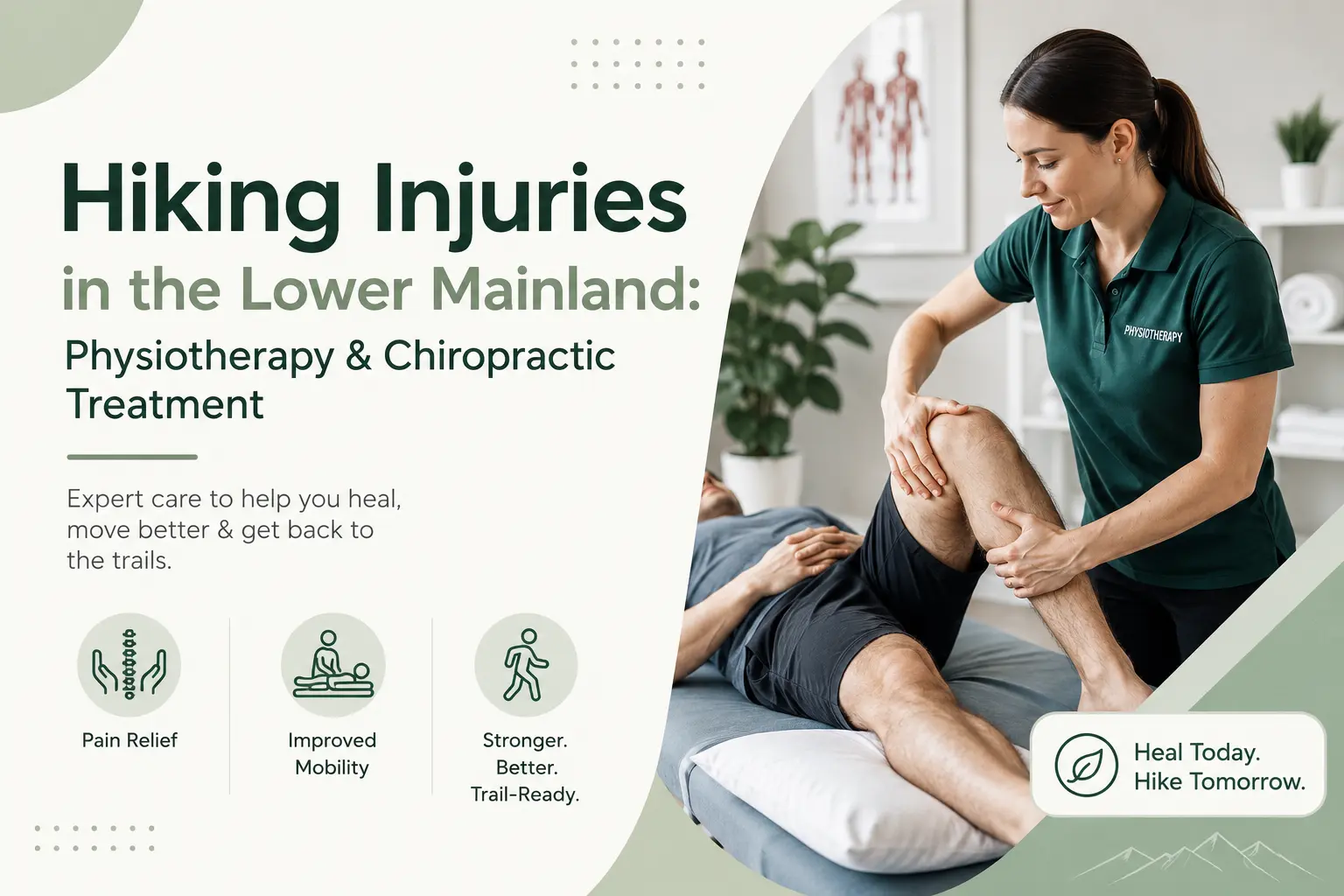
The Lower Mainland offers some of British Columbia’s best hiking opportunities. From local trails around Abbotsford and Chilliwack to hikes throughout Mission, Cultus Lake, Golden Ears, North Vancouver, and the Fraser Valley, hiking is a great way to stay active and enjoy the outdoors.
However, uneven terrain, steep climbs, long descents, slippery roots, rocks, and sudden increases in hiking distance can also place considerable stress on the feet, ankles, knees, hips, and lower back.
At Townline Physiotherapy & Wellness in Abbotsford, our physiotherapy and chiropractic team helps hikers manage musculoskeletal injuries, improve mobility, restore strength, and safely return to the trails.
Depending on your assessment and individual needs, treatment may include exercise rehabilitation, manual therapy, chiropractic care, taping, dry needling, cupping therapy, Bioflex laser therapy, and other rehabilitation strategies.
Why Are Hiking Injuries Common in the Lower Mainland?
Hiking places different demands on the body compared with walking on level ground.
Lower Mainland trails may include:
- steep uphill climbs
- long downhill sections
- rocks and tree roots
- muddy or slippery terrain
- narrow or uneven trails
- creek crossings
- loose gravel
- stairs and steep inclines
- changing elevation
- long distances
During uphill hiking, the calves, quadriceps, gluteal muscles, and cardiovascular system work harder.
During downhill hiking, the quadriceps must repeatedly control the body as you descend. This type of eccentric muscle loading can contribute to knee soreness, muscle fatigue, and reduced control if your body is not accustomed to it.
Uneven terrain also places greater demands on ankle stability, balance, hip strength, and coordination.
Common Hiking Injuries We See
1. Ankle Sprains
Ankle sprains are among the most common hiking injuries.
They often occur when the foot unexpectedly rolls inward or outward after stepping on:
- a rock
- tree root
- uneven ground
- loose gravel
- the edge of a trail
Symptoms may include:
- ankle pain
- swelling
- bruising
- difficulty walking
- reduced range of motion
- instability
Physiotherapy after an ankle sprain may focus on restoring movement, strength, balance, and ankle stability before returning to longer or more technical hikes.
2. Knee Pain While Hiking
Knee pain is especially common during downhill hiking.
Common hiking-related knee problems may include:
- patellofemoral pain
- irritation around the kneecap
- patellar tendon irritation
- quadriceps overload
- meniscus irritation
- osteoarthritis-related pain
- IT band-related symptoms
People often report pain while:
- descending hills
- climbing stairs
- stepping down from rocks
- hiking for long periods
- walking downhill after several kilometres
A physiotherapy assessment can help determine whether strength, mobility, load management, footwear, movement mechanics, or other factors may be contributing.
3. Achilles Tendon Pain
The Achilles tendon connects the calf muscles to the heel.
Steep uphill hiking can substantially increase the workload on the calves and Achilles tendon.
Symptoms may include:
- pain behind the heel
- morning stiffness
- soreness while climbing
- tenderness along the tendon
- discomfort after activity
A rehabilitation program may involve gradual strengthening, calf-loading exercises, mobility work, activity modification, and a progressive return to hiking.
4. Plantar Fasciitis and Heel Pain
Long hikes may aggravate pain underneath the heel or arch.
Factors that can contribute include:
- sudden increases in hiking distance
- limited ankle mobility
- calf tightness
- changes in footwear
- prolonged standing or walking
- high overall training load
Physiotherapy may focus on calf and foot strength, mobility, activity modification, footwear considerations, and gradual loading.
5. Shin Pain
Hikers may experience pain along the front or inside of the lower leg after significantly increasing walking or hiking volume.
This may be related to repetitive loading of the muscles and tissues around the shin.
Because persistent shin pain can occasionally have other causes, including bone stress injuries, an assessment is particularly important if pain is worsening, highly localized, or present during normal walking.
6. Hip Pain
Hip pain during hiking may occur at the front, side, or back of the hip.
Potential contributors can include:
- hip muscle fatigue
- gluteal weakness
- repeated climbing
- long downhill sections
- changes in hiking volume
- reduced hip mobility
- irritation of muscles or tendons around the hip
Hip strength is especially important for controlling the knee and pelvis while stepping over uneven terrain.
7. Low Back Pain
Carrying a backpack, hiking uphill, walking for several hours, or navigating uneven surfaces can contribute to
lower-back discomfort.
Factors may include:
- backpack load
- fatigue
- reduced trunk endurance
- hip stiffness
- sudden increase in activity
- prolonged bending
- poor load distribution
Physiotherapy or chiropractic assessment may help determine the factors contributing to your symptoms and develop an appropriate treatment and exercise plan.
8. Muscle Strains
Calf, hamstring, quadriceps, and hip muscle strains can occur while:
- climbing steep terrain
- slipping
- jumping across obstacles
- taking unexpectedly large steps
- hiking when fatigued
The severity of muscle injuries varies considerably, so treatment and return-to-hiking timelines should be individualized.
9. Shoulder and Neck Pain From Backpacks
A poorly fitted or overloaded backpack can contribute to:
- neck stiffness
- upper-back discomfort
- shoulder pain
- headaches
- muscle fatigue
Adjusting pack weight and strap positioning may help, while physiotherapy or chiropractic treatment may address mobility, strength, and activity-related factors.
Physiotherapy for Hiking Injuries in Abbotsford
Physiotherapy treatment begins with understanding what happened and what is limiting you now.
Your assessment may include:
- pain history
- walking and hiking tolerance
- joint range of motion
- muscle strength
- balance
- mobility
- functional movement
- footwear considerations
- previous injuries
- hiking distance and terrain
- return-to-activity goals
Treatment is then individualized.
Exercise Rehabilitation
Exercise is often an important part of hiking-injury rehabilitation.
Depending on the injury, exercises may focus on:
Ankle Strength
To improve stability on uneven terrain.
Calf Strength
Important for uphill walking and controlling the ankle.
Quadriceps Strength
Especially important for downhill hiking.
Hip and Gluteal Strength
Helps control the pelvis, knee, and lower limb during single-leg movements.
Balance and Proprioception
Important for reacting to rocks, roots, uneven ground, and unexpected changes in terrain.
Core and Trunk Endurance
Helpful for managing long hikes and carrying a backpack.
A good rehabilitation program should eventually become increasingly similar to the activity you want to return to.
For hikers, this may include:
- step-ups
- step-downs
- single-leg exercises
- calf raises
- lunges
- loaded carries
- balance exercises
- incline walking
- progressive hiking
Chiropractic Treatment for Hiking-Related Pain
Chiropractic care may also be considered for certain musculoskeletal complaints associated with hiking, particularly involving the:
- lower back
- mid-back
- neck
- hips
- pelvis
- joints
A chiropractor will assess your symptoms, mobility, function, and relevant movement patterns before recommending treatment.
Depending on the individual, treatment may include:
- joint mobilization or manipulation
- soft-tissue techniques
- mobility exercises
- strengthening recommendations
- activity modification
- posture or backpack advice
Chiropractic treatment should be individualized to your condition and integrated with active rehabilitation where appropriate.
Taping for Hiking Injuries
Taping may sometimes be used as a short-term support during rehabilitation.
Depending on the injury and assessment, taping may be considered for problems involving the:
- ankle
- knee
- patella
- Achilles tendon
- foot
- shoulder
For example, ankle taping may provide additional external support while returning to activity after certain ankle injuries.
Kinesiology tape may also sometimes be used to provide sensory feedback or temporary support.
However, taping should generally not replace appropriate strengthening, balance training, or rehabilitation.
The goal is usually to build enough strength and control so that you become less dependent on external support over time.
Dry Needling for Hiking-Related Muscle Pain
Dry needling involves inserting thin sterile needles into selected muscles or tissues.
A physiotherapist trained in dry needling may consider it for certain musculoskeletal presentations involving:
- calf tightness
- quadriceps discomfort
- gluteal muscle pain
- hip muscle tension
- neck or upper-back muscle pain
- some tendon-related conditions
Dry needling may be used as one part of a broader treatment plan when clinically appropriate.
It is generally most useful when combined with active rehabilitation rather than being used as a stand-alone solution.
Cupping Therapy for Hikers
Cupping therapy uses cups applied to the skin to create suction.
Some patients find cupping helpful for temporary relief of muscle tightness or soreness.
Areas commonly treated in hikers may include:
- calves
- quadriceps
- hamstrings
- gluteal muscles
- lower back
- upper back
Cupping may leave temporary circular skin marks or bruising.
It is not appropriate for everyone, so your clinician should determine whether it is suitable based on your health history and assessment.
Bioflex Laser Therapy
Townline Physiotherapy also offers Bioflex laser therapy.
Low-level laser therapy uses specific wavelengths of light and may be considered as an adjunct treatment for certain musculoskeletal conditions.
Depending on the assessment, Bioflex laser may be considered as part of treatment for conditions involving:
- muscles
- tendons
- joints
- soft tissues
It should generally be viewed as an additional treatment tool rather than a replacement for exercise, progressive loading, strengthening, and movement rehabilitation.
Your physiotherapist can discuss whether Bioflex laser therapy is appropriate for your particular injury.
When Should You See a Physiotherapist After a Hiking Injury?
Consider an assessment if:
- pain is not improving
- swelling persists
- you are unable to walk normally
- the ankle repeatedly gives way
- pain returns every time you hike
- knee pain occurs consistently when descending
- you have reduced strength or range of motion
- symptoms are stopping you from exercising
- you are unsure whether it is safe to return to hiking
- you have had repeated injuries to the same area
Seek urgent medical care when an injury involves severe pain, obvious deformity, inability to bear weight, significant trauma, new neurological symptoms, or other concerning signs.
How to Reduce Your Risk of Hiking Injuries
No strategy can prevent every injury, but preparation can reduce unnecessary risk.
Increase Distance Gradually
Avoid going from short walks to a long technical hike without building up gradually.
Train for Downhill Hiking
Many people prepare for climbing but forget that descending can be particularly demanding on the quadriceps and knees.
Exercises such as controlled step-downs can help prepare the legs.
Strengthen Your Ankles
Calf raises, single-leg balance exercises, and progressive lower-limb strengthening can help improve ankle control.
Train Your Hips and Glutes
Strong hip muscles help control the leg during climbing, descending, and uneven terrain.
Choose Appropriate Footwear
Your footwear should be suitable for the terrain, distance, weather, and your individual needs.
Use Hiking Poles When Appropriate
Hiking poles may improve stability and can be useful on steep or uneven terrain for some hikers.
Manage Backpack Weight
Carry what you need, but avoid unnecessary load.
Make sure the backpack fits properly and distributes weight comfortably.
Take Breaks
Fatigue reduces coordination and can increase the chance of slips or poor foot placement.
Prepare for the Lower Mainland Environment
Weather and trail conditions can change quickly.
Roots, rocks, mud, water, snow, and loose surfaces may all affect traction and stability.
Returning to Hiking After an Injury
Returning to hiking should usually be gradual.
A typical progression may move from:
short flat walks
→ longer walks
→ hills
→ uneven terrain
→ shorter hikes
→ longer or more technical hikes.
Before attempting a demanding hike, you should ideally be able to tolerate the physical requirements of the trail without significant worsening of your symptoms.
Your physiotherapist can help determine appropriate progression based on your specific injury.
Physiotherapy & Chiropractic Care for Hikers in Abbotsford
Whether you enjoy casual Fraser Valley walks, weekend hikes throughout the Lower Mainland, or challenging mountain trails, an injury does not necessarily mean giving up the activities you enjoy.
At Townline Physiotherapy & Wellness in Abbotsford, our team provides individualized assessment and rehabilitation for hiking-related injuries involving the feet, ankles, knees, hips, back, shoulders, and other musculoskeletal areas.
Depending on your condition, your treatment plan may include:
- physiotherapy
- chiropractic care
- exercise rehabilitation
- manual therapy
- taping
- dry needling
- cupping therapy
- Bioflex laser therapy
- education and activity modification
The treatment approach is based on your assessment, symptoms, goals, and the demands of the hikes you want to return to.
Book an Appointment
If a hiking injury is preventing you from walking, exercising, or getting back on the trails, consider booking an assessment with Townline Physiotherapy & Wellness in Abbotsford.
Our goal is to help you understand your injury, restore mobility and strength, and safely return to the activities you enjoy.
Frequently Asked Questions
What is the most common injury while hiking?
Ankle sprains, knee pain, muscle strains, Achilles tendon irritation, heel pain, and blisters are common hiking-related problems. The type of injury often depends on the terrain, hiking distance, footwear, conditioning, and whether a fall or twist occurred.
Why do my knees hurt when hiking downhill?
Downhill walking requires the quadriceps muscles to repeatedly control your body as you lower yourself with each step. This can significantly increase stress around the knee, particularly if you are not accustomed to downhill hiking. Strength, mobility, previous injuries, hiking volume, and other factors may also contribute.
Can physiotherapy help an ankle sprain from hiking?
Yes. Physiotherapy may help restore ankle movement, strength, balance, and confidence following an ankle sprain. Treatment depends on the severity of the injury and your functional goals.
When can I hike again after an ankle sprain?
There is no single timeline. Return to hiking depends on the severity of the sprain, swelling, pain, strength, balance, walking tolerance, and ability to handle uneven terrain. Your physiotherapist can help guide a gradual return.
Can chiropractic treatment help back pain after hiking?
Chiropractic care may be appropriate for certain types of musculoskeletal back pain. Treatment should follow an assessment and may include manual treatment, mobility work, exercise, and advice regarding activity and backpack use.
Is taping helpful for hiking injuries?
Taping may provide short-term support or sensory feedback for certain ankle, knee, foot, or other musculoskeletal injuries. It should generally be combined with appropriate rehabilitation rather than used as the only treatment.
Does dry needling help hiking injuries?
Dry needling may be considered for certain muscle or musculoskeletal problems when appropriate. It may help some patients with muscle pain or tightness, but it is generally used alongside exercise and rehabilitation rather than as a stand-alone treatment.
Is cupping therapy useful after hiking?
Some people find cupping helpful for temporary muscle soreness or tightness. Whether it is appropriate depends on the injury and your medical history.
What is Bioflex laser therapy?
Bioflex laser therapy is a form of low-level laser therapy that uses light energy and may be used as an adjunct treatment for selected musculoskeletal conditions. Your physiotherapist can determine whether it is appropriate for you.
Should I use ice or heat after a hiking injury?
This depends on the type of injury, symptoms, and personal preference. Cold may temporarily reduce pain after some acute injuries, while heat may feel helpful for muscle stiffness. Neither should replace assessment when an injury is significant or persistent.
Should I stop hiking completely if my knee hurts?
Not always. Some people may only need temporary activity modification, shorter distances, flatter terrain, or a rehabilitation program. Persistent or worsening knee pain should be assessed so that the cause and appropriate activity level can be determined.
Can hiking poles reduce knee pain?
Hiking poles may improve stability and may reduce some of the loading demands during climbing and descending for certain hikers. Proper technique and appropriate pole length are important.
How can I prepare my body for hiking season?
A hiking-preparation program may include:
- calf strengthening
- quadriceps strengthening
- hip and glute exercises
- balance training
- step-ups and step-downs
- walking on inclines
- gradually increasing walking distance
- carrying progressively heavier backpacks when appropriate
When should I seek medical attention after a hiking injury?
Seek prompt medical assessment after significant trauma, inability to bear weight, obvious deformity, severe swelling, worsening neurological symptoms, suspected fracture, head injury, or symptoms that are severe or concerning.