
Extracorporeal Shock Wave Therapy

August 12, 2025

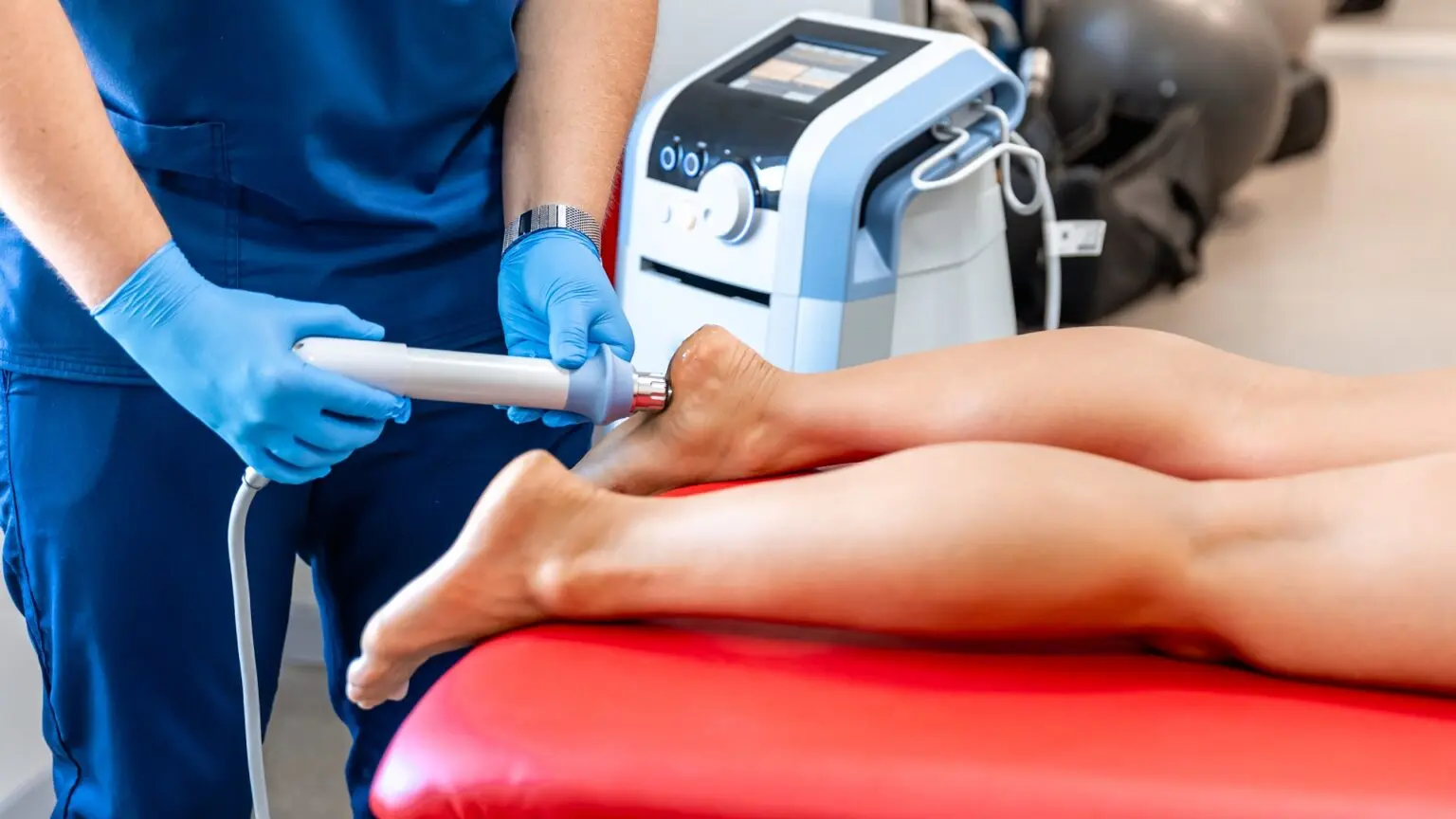
Extracorporeal shockwave therapy (ESWT) delivers mechanical acoustic pulses to a targeted area. A physiotherapist may consider it for selected persistent tendon or soft-tissue conditions as one part of a rehabilitation program. It is not appropriate for every injury, and evidence differs by condition.

What conditions may be considered?

Depending on the assessment and current evidence, shockwave therapy may be considered for some persistent tendon-related problems, such as plantar heel pain, selected Achilles or patellar tendon symptoms, calcific shoulder tendinopathy, or pain around the outside of the hip. It should not be marketed as a universal treatment for pain or all injuries.
For related care, see our pages on plantar fasciitis, rotator cuff injuries, and hip pain and bursitis.

What happens during treatment?

The clinician identifies the treatment area and explains the proposed dose and expected sensation. The applicator delivers repeated pulses through the skin. Treatment can feel uncomfortable, and intensity may be adjusted. Temporary soreness, redness, bruising, or increased sensitivity may occur.

Shockwave therapy and exercise

Where shockwave is appropriate, it is commonly paired with education, load management, and progressive exercise. The active rehabilitation plan helps build the strength and capacity needed for work, walking, sport, or daily activity. The number of sessions and response vary by diagnosis and individual factors.

Evidence and realistic expectations

Research findings are not the same for every body region or diagnosis. Some conditions have supportive evidence, while others have limited or no published evidence. A responsible recommendation should be based on the specific condition—not on promises of faster healing, immediate relief, or a pain-free outcome.

Who may need a different approach?

Tell your clinician about pregnancy, cancer, infection, bleeding disorders, blood-thinning medication, impaired sensation, recent surgery, implanted devices, or other medical concerns. The physiotherapist should discuss contraindications, alternatives, potential benefits, and risks before obtaining consent.

Book an assessment

Learn more about shockwave therapy or our broader physiotherapy services. To find out whether assessment is appropriate for your symptoms, contact our Abbotsford clinic.

This article provides general information and is not a treatment recommendation for an individual.

Recent Posts

Townline Physio Assistant

Here to help you book your appointment