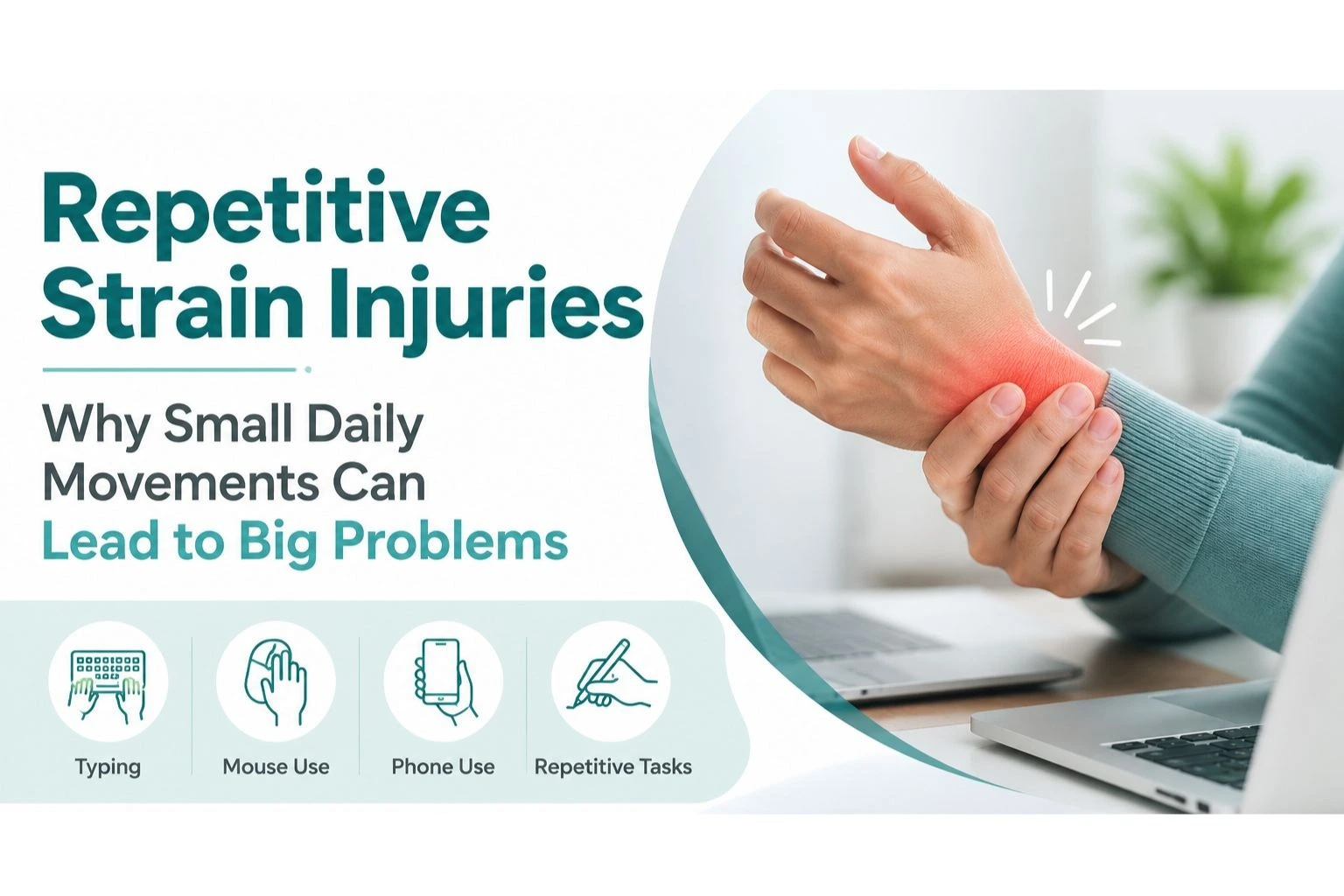
Many people think injuries only happen after a fall or a motor vehicle accident. However, some of the most common injuries I treat develop gradually over weeks, months, or even years due to repetitive movements at work.
Whether you’re lifting boxes in a warehouse, operating machinery in a mill, working long hours on a computer, or using repetitive overhead movements, your muscles, tendons, joints, and nerves can become overloaded. Without proper treatment, these repetitive strain injuries (RSIs) can lead to persistent pain, weakness, and reduced function.
— Jimmy, Physiotherapist at Townline Physiotherapy Abbotsford
What Is a Repetitive Strain Injury (RSI)?
A repetitive strain injury develops when the same movement is repeated over time without enough recovery. Small amounts of stress accumulate, causing irritation to muscles, tendons, ligaments, joints, or nerves.
Unlike a sudden injury, repetitive strain injuries usually develop gradually and become more noticeable as the workload increases.
Workers Most at Risk
At Townline Physiotherapy Abbotsford, we frequently treat:
- Mill workers
- Industrial workers
- Warehouse employees
- Construction workers
- Healthcare professionals
- Office workers
- Truck drivers
- Mechanics
- Electricians
- Carpenters
- Manufacturing workers
- Dental professionals
- Hairstylists
- Retail workers
These occupations often involve repetitive lifting, gripping, pushing, pulling, overhead work, prolonged standing, or extended computer use.
Common Repetitive Strain Injuries
Rotator Cuff Injuries
The rotator cuff consists of four muscles that stabilize your shoulder. Repetitive overhead lifting, pushing, pulling, or working with your arms above shoulder height can overload these tendons.
Common Symptoms
- Shoulder pain when lifting your arm
- Pain reaching overhead
- Weakness while lifting objects
- Difficulty sleeping on the affected shoulder
- Pain reaching behind your back
- Clicking or catching sensations
- Pain when throwing or working overhead
Common occupations include painters, electricians, mill workers, warehouse staff, healthcare workers, and mechanics.
Tennis Elbow (Lateral Epicondylitis)
Despite its name, tennis elbow commonly affects people who have never played tennis.
It develops from repetitive gripping, lifting, twisting, or tool use.
Common Symptoms
- Pain on the outside of the elbow
- Pain when lifting objects
- Weak grip strength
- Pain opening jars
- Difficulty shaking hands
- Pain using tools
- Pain while carrying groceries
Common occupations include carpenters, mechanics, plumbers, warehouse workers, landscapers, and industrial workers.
Golfer’s Elbow (Medial Epicondylitis)
Golfer’s elbow affects the tendons on the inside of the elbow.
Common Symptoms
- Pain on the inside of the elbow
- Pain gripping objects
- Pain lifting heavy items
- Forearm tightness
- Wrist weakness
- Pain with repetitive lifting
This condition commonly develops in workers performing repetitive lifting and manual labour.
Carpal Tunnel Syndrome in Computer Users
Typing for long periods, repetitive mouse use, poor workstation ergonomics, and repetitive hand movements may contribute to compression of the median nerve at the wrist.
Common Symptoms
- Numbness in the thumb, index, and middle fingers
- Tingling in the hand
- Weak grip strength
- Hand fatigue
- Night-time numbness
- Difficulty holding objects
- Dropping items unexpectedly
Early treatment can help improve symptoms and address contributing factors.
Low Back Pain from Repetitive Lifting
Repeated lifting without proper body mechanics places significant stress on the lower back.
Common workplace causes include:
- Warehouse work
- Construction
- Healthcare transfers
- Mill work
- Manufacturing
- Landscaping
- Delivery services
Common Symptoms
- Lower back pain
- Muscle spasms
- Stiffness after lifting
- Pain bending forward
- Pain while standing
- Pain travelling into the buttock or leg
- Reduced lifting tolerance
Mill Workers and Industrial Workers
Mill and industrial environments often involve:
- Repetitive lifting
- Heavy materials handling
- Vibrating equipment
- Repetitive gripping
- Prolonged standing
- Awkward postures
- Overhead work
- Repetitive twisting
These demands increase the risk of:
Early physiotherapy can help reduce symptoms, improve movement, and support a safe return to work.
Physio Jimmy’s Assessment
Every patient receives a comprehensive assessment that may include:
- Posture evaluation
- Joint mobility testing
- Muscle strength assessment
- Flexibility testing
- Nerve mobility assessment
- Functional movement analysis
- Workplace movement assessment
- Lifting mechanics evaluation
- Ergonomic recommendations
Understanding the source of your symptoms allows us to create a treatment plan tailored to your work demands.
Physiotherapy Treatment for Repetitive Strain Injuries
Dry Needling
Dry needling targets tight muscles and trigger points that contribute to pain and restricted movement.
Potential benefits include:
- Reduced muscle tension
- Improved flexibility
- Pain relief
- Better muscle activation
- Improved movement
Shockwave Therapy
Shockwave therapy may be recommended for chronic tendon injuries such as:
- Tennis elbow
- Golfer’s elbow
- Rotator cuff tendinopathy
Potential benefits include:
- Stimulating tissue healing
- Improving blood flow
- Reducing chronic tendon pain
- Supporting recovery when combined with exercise
Cold Laser Therapy
Cold laser therapy (Low-Level Laser Therapy) may help:
- Reduce inflammation
- Relieve pain
- Improve circulation
- Promote tissue healing
- Support recovery from tendon and soft tissue injuries
Therapeutic Taping
Athletic or kinesiology taping may help:
- Support injured tissues
- Reduce strain during work
- Improve posture awareness
- Encourage normal movement
- Increase confidence while returning to activity
Massage Therapy & Manual Therapy
Hands-on treatment can help:
- Reduce muscle tightness
- Improve circulation
- Increase joint mobility
- Decrease stiffness
- Improve tissue flexibility
Massage therapy is often combined with active rehabilitation for optimal results.
Exercise Rehabilitation
Exercise is essential for long-term recovery and injury prevention.
Your program may include:
- Rotator cuff strengthening
- Scapular stabilization exercises
- Forearm strengthening
- Grip strengthening
- Core stabilization
- Hip strengthening
- Stretching exercises
- Postural correction
- Functional lifting retraining
Physio Jimmy’s Injury Prevention Tips
To reduce your risk of repetitive strain injuries:
- Warm up before physically demanding work.
- Use proper lifting techniques.
- Keep loads close to your body.
- Avoid repetitive overhead work when possible.
- Take regular movement breaks.
- Stretch throughout your workday.
- Strengthen your shoulders, core, and forearms.
- Adjust your workstation ergonomics.
- Seek treatment early if symptoms persist.
Why Choose Townline Physiotherapy Abbotsford?
At Townline Physiotherapy Abbotsford, we understand the physical demands of industrial, office, and manual labour jobs.
We provide:
- One-on-one physiotherapy
- Comprehensive work injury assessments
- WorkSafeBC rehabilitation
- ICBC rehabilitation
- Dry needling
- Shockwave therapy
- Cold laser therapy
- Therapeutic taping
- Manual therapy
- Massage techniques
- Exercise rehabilitation
- Workplace injury prevention education
- Direct billing to most insurance providers
Our goal is to reduce pain, restore function, and help you safely return to work.
Frequently Asked Questions
What is a repetitive strain injury?
A repetitive strain injury (RSI) is a musculoskeletal condition caused by repeated movements, sustained postures, or overuse over time. It can affect muscles, tendons, ligaments, joints, and nerves.
Can repetitive computer work cause carpal tunnel syndrome?
Yes. Prolonged keyboard and mouse use, combined with poor workstation ergonomics and repetitive hand movements, may contribute to symptoms of carpal tunnel syndrome in some individuals.
How do I know if I have tennis elbow or golfer’s elbow?
Tennis elbow typically causes pain on the outside of the elbow, while golfer’s elbow causes pain on the inside. Both conditions often worsen with gripping, lifting, or repetitive wrist movements.
Can physiotherapy help rotator cuff injuries?
Yes. Physiotherapy is commonly recommended to improve shoulder mobility, strengthen the rotator cuff muscles, reduce pain, and restore function. Your treatment plan will depend on the severity and cause of the injury.
Does shockwave therapy help chronic tendon injuries?
Shockwave therapy may help stimulate healing and reduce pain in certain chronic tendon conditions, such as tennis elbow, golfer’s elbow, and some rotator cuff tendinopathies. It is generally used alongside an active rehabilitation program.
Can dry needling help repetitive strain injuries?
Dry needling may help reduce muscle tightness and pain associated with repetitive strain injuries when clinically appropriate. It is typically combined with exercise and manual therapy.
When should I see a physiotherapist?
If pain lasts longer than one to two weeks, limits your work or daily activities, causes numbness or weakness, or keeps returning despite rest, an assessment by a physiotherapist is recommended.
Book Your Physiotherapy Assessment Today
If you’re experiencing shoulder pain, tennis elbow, golfer’s elbow, carpal tunnel symptoms, low back pain from lifting, or any repetitive strain injury, don’t wait until it affects your work or quality of life.
At Townline Physiotherapy Abbotsford, Jimmy and the team provide personalized rehabilitation using dry needling, shockwave therapy, cold laser therapy, therapeutic taping, manual therapy, massage, and customized exercise programs to help you recover, prevent recurrence, and get back to doing what you do best.